Erectile dysfunction is one of the most common health concerns men face, and one of the least talked about. If you are looking for an answer that does not begin with a prescription, the evidence points somewhere reassuringly familiar: your cardiovascular system. Cardio exercise for erectile dysfunction is among the best-studied non-drug approaches available, and the reason it works tells you something important about your wider health. Here is what the research actually shows.
Why erectile dysfunction is a heart-health signal
An erection is, at its core, a vascular event — it depends on healthy blood vessels and the lining inside them, the endothelium, relaxing to let blood flow. That is why erectile difficulties are rarely just a local problem. Based on articles retrieved from PubMed, a 2025 review concluded that erectile dysfunction is an independent risk factor and an early prognostic marker for cardiovascular disease, sharing the same underlying mechanisms: endothelial dysfunction, oxidative stress and chronic inflammation (An et al., 2025, DOI).
In other words, the small arteries that supply the penis often show strain before the larger arteries of the heart do. This reframes the question entirely. Improving erectile function is not a vanity project; it is an opportunity to act on your cardiovascular health while there is time to make a difference — which is precisely where exercise earns its place.
Does cardio exercise actually help?
The evidence here is unusually consistent. According to PubMed, a systematic review and meta-analysis of seven randomised controlled trials, including 478 men diagnosed with erectile dysfunction, found that physical activity and exercise produced a statistically significant improvement in erectile function, with a mean gain of 3.85 points on the International Index of Erectile Function — the standard clinical questionnaire. The benefit was strongest for aerobic exercise at moderate-to-vigorous intensity (Silva et al., 2016, DOI).
More recent work supports this. A 2023 meta-analysis of 11 randomised controlled trials found that aerobic exercise improved erectile function scores by an average of 2.8 points compared with non-exercising controls, and the authors recommended regular aerobic exercise as a low-risk, non-pharmacological option for men with erectile difficulties (Khera et al., 2023, DOI). A 2024 meta-analysis reached the same conclusion and was more specific about which type works: aerobic training alone produced a clear benefit, while pelvic-floor exercises on their own did not (Chen et al., 2024, DOI).
How much improvement can you expect?
This is where the data become genuinely encouraging. The 2023 meta-analysis found that the men who started with the most severe difficulties gained the most from training. Improvements in erectile function scores were 2.3 points for mild cases, 3.3 for moderate, and 4.9 for severe (Khera et al., 2023, DOI). To put that in context, a change of around four points on this scale is generally considered clinically meaningful — so the men with the most to gain often saw a difference they could feel.
As for how long it takes, the trials in the 2016 review ran from eight weeks to two years, and a benefit was detectable in both short-term and longer programmes — so this is a habit to build steadily rather than a quick fix (Silva et al., 2016, DOI). It is worth being honest about the limits of the evidence too. The trials were relatively small, and several carried a moderate-to-high risk of bias because participants cannot be blinded to whether they are exercising. Exercise is not a guaranteed cure, and results vary from person to person. But for a free intervention with so many other benefits, the case is strong.
Why aerobic and interval training in particular
The mechanism explains the pattern. Cardio training improves the health and responsiveness of the endothelium — the same vascular lining whose dysfunction underlies both erectile difficulties and heart disease (An et al., 2025, DOI). By raising your cardiorespiratory fitness, you are improving the very system an erection depends on. This is why aerobic work consistently outperforms approaches that target muscles alone (Chen et al., 2024, DOI).
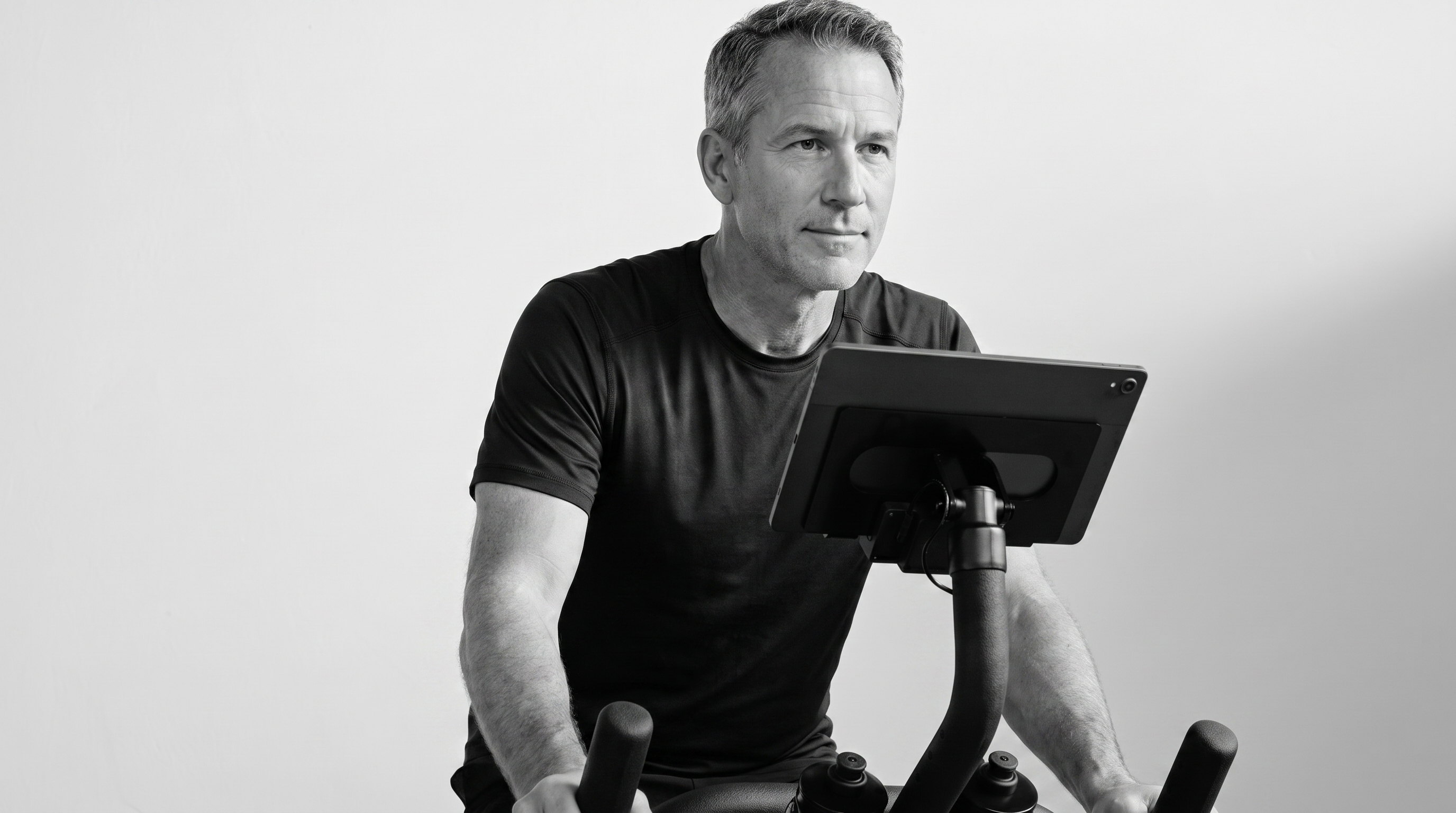
It also helps explain why cycling is a sensible choice. A stationary bike delivers a controlled, joint-friendly cardiovascular stimulus that is easy to repeat consistently — and consistency, not heroics, is what shifts vascular health over weeks and months.
Where REHIT fits
If time is the obstacle, intensity can do some of the work for you. This is the thinking behind REHIT, or Reduced Exertion High-Intensity Interval Training — CAROL’s signature workout, built around two 20-second all-out sprints and completed in around five minutes. It is a potent cardiorespiratory stimulus delivered in a dose you can realistically keep up three times a week, which matters when the benefits depend on sticking with it.
One important caveat: because erectile dysfunction can be an early warning of underlying cardiovascular disease, it deserves a conversation with your doctor rather than a workout alone. Treat new or persistent symptoms as a prompt to get your heart health checked — and let exercise be part of the response, not a way to avoid one.
It works best alongside the basics
Exercise does not act in isolation. A large 2024 meta-analysis of 14 studies and more than 27,000 participants found that combining diet with exercise reduced the likelihood of erectile dysfunction and improved erectile function scores, while diets rich in fruit, vegetables and nuts — broadly the Mediterranean pattern — were associated with lower risk (Yang et al., 2024, DOI). The same lifestyle measures that protect your arteries protect erectile function, because they are the same arteries.
The bottom line
Cardio exercise for erectile dysfunction is one of the most evidence-backed lifestyle approaches available, with multiple randomised trials showing meaningful improvements — particularly from moderate-to-vigorous aerobic training, and particularly for men whose symptoms are more pronounced. The deeper point is that erectile function and cardiovascular health rise and fall together, because both rest on the health of your blood vessels. Improving your cardiorespiratory fitness is one of the few things that can help in both directions at once. Speak to your doctor, keep your training consistent, and treat the symptom as the useful signal it is.