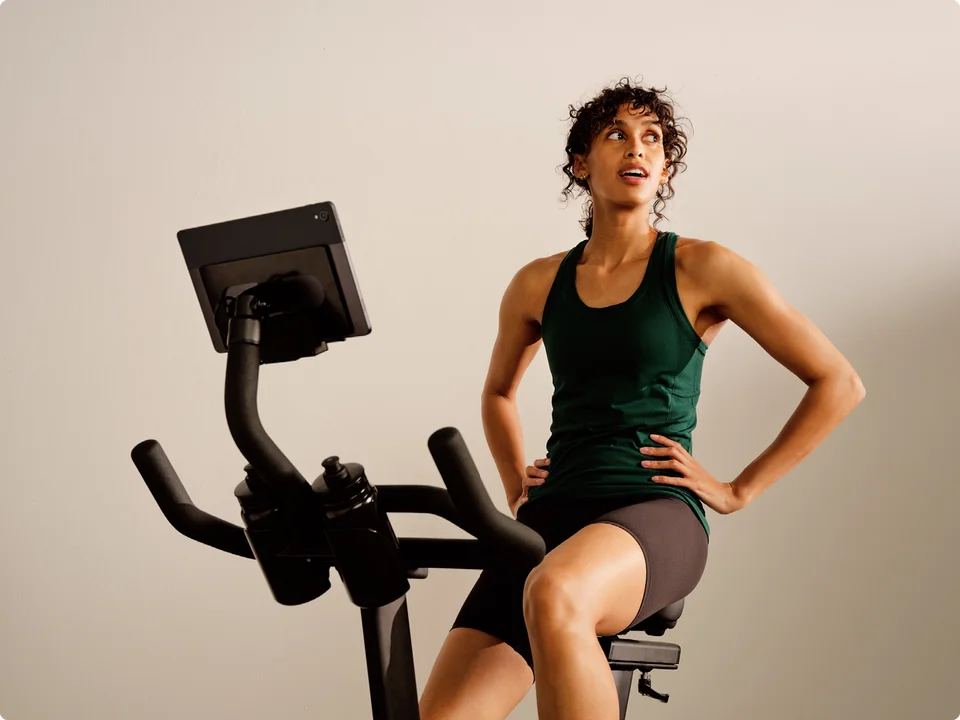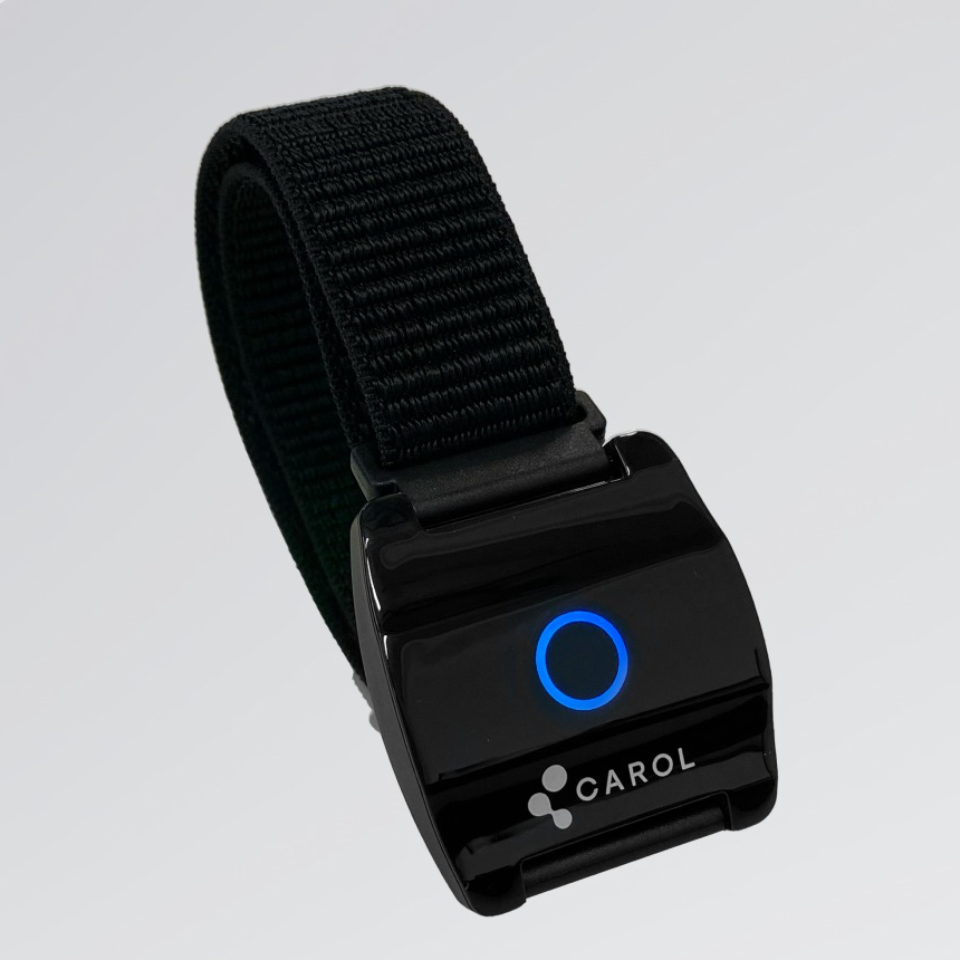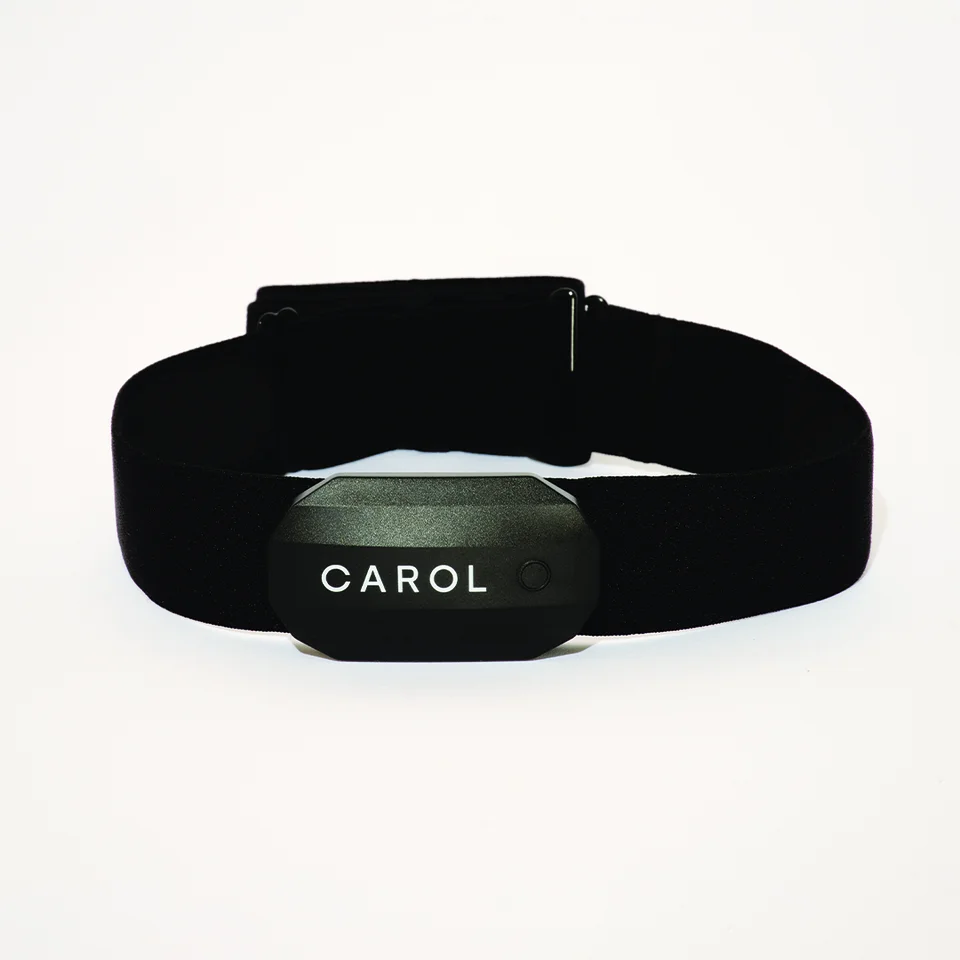
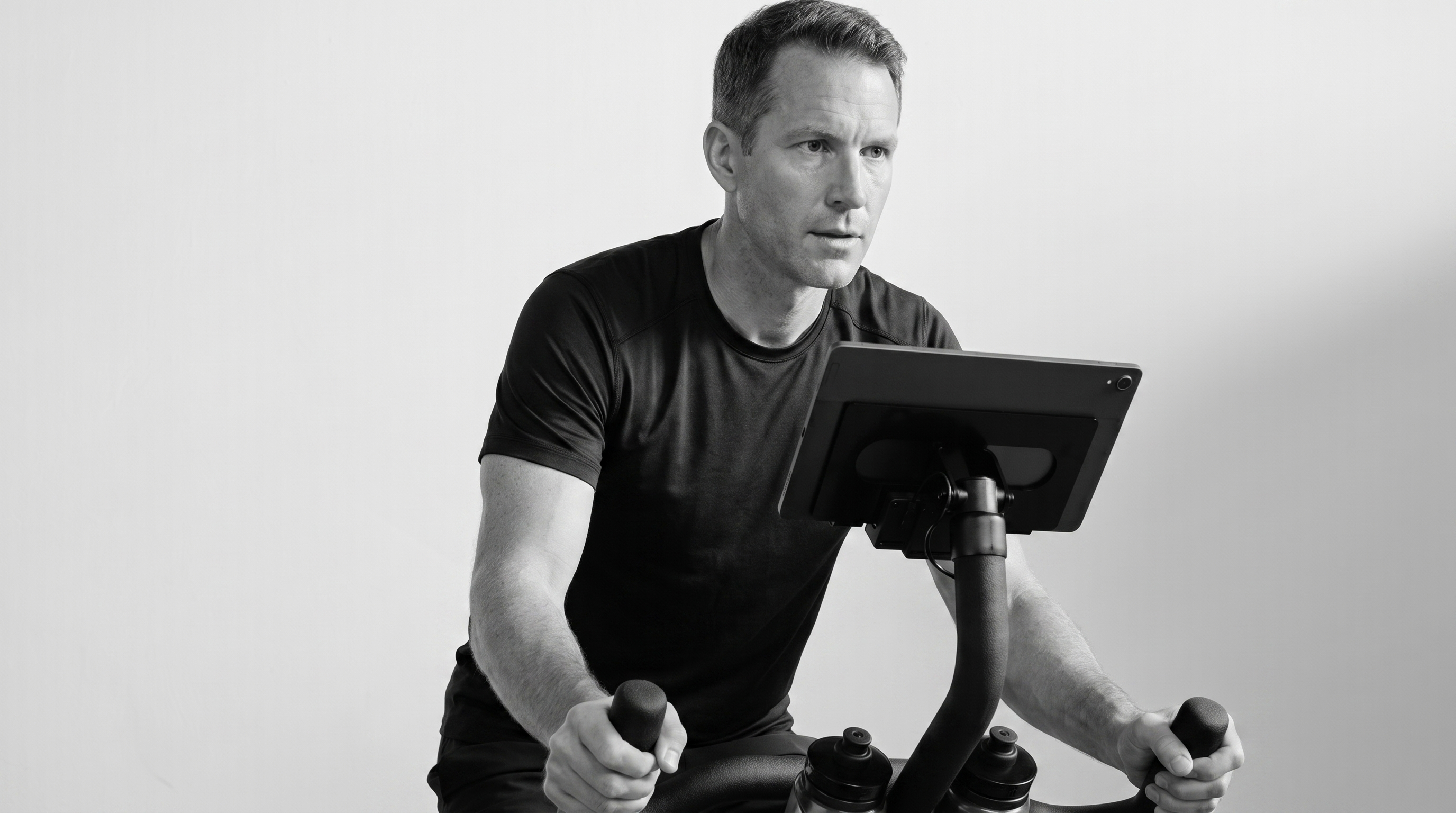
Zone-based training, in particular Zone 2, is having a moment for a reason: it makes cardio feel purposeful. Instead of riding “kind of hard” and hoping for the best, you train with intent—easy when it should be easy, challenging when it should be challenging, and max effort when you’re meant to go all in.
The problem? Most people never really know if they’re in the right zone. They’re chasing a number, watching it drift, adjusting constantly, and still finishing a session thinking: Was that actually the point of today’s workout?
CAROL Bike makes zone-based training simpler and more accurate by doing 2 things most setups don’t:
- It calculates your zones based on performance testing, not guesswork.
- It can automatically adjust resistance to help you stay where you’re trying to train, whether that’s steady aerobic work or all-out efforts.
Let’s break it down.
Understanding Heart Rate Zones
Training zones are intensity bands, each one nudging your body toward a different kind of adaptation.
- Zone 1 (easy): warm-up, recovery, low stress
- Zone 2 (steady): endurance foundation, aerobic base
- Zone 3 (moderate-hard): tempo work, stronger sustained effort
- Zone 4 (hard): threshold work, “comfortably uncomfortable”
- Zone 5 (very hard): top-end intensity you can only hold briefly
Zones can be built around heart rate, power, or a mix of both. The important part is that they’re personal—your Zone 3 isn’t someone else’s Zone 3, even if you’re the same age.
Why your watch keeps getting zones wrong
Wearables are great tools, but they’re not perfect zone coaches. Here’s why:
1) Many zones start from a generic estimate
A lot of devices still rely on age-based formulas to estimate max heart rate. That’s a rough average, not a personal measurement, so the zones built on top can be off from the start.
2) Wrist heart rate isn’t always stable
Wrist sensors can struggle when:
- your strap isn’t snug enough
- your hands are gripping bars
- you’re sweating heavily or moving more
- you’re riding in colder conditions
When the signal wobbles, your zone readout wobbles with it, so you can be “in Zone 4” one minute and “in Zone 2” the next without changing effort.
3) Heart rate lags behind effort
Heart rate is a response, not a real-time output. When you surge, your heart rate can take time to catch up. When you recover, it can stay elevated. That lag can make interval sessions especially confusing.
4) Heart rate drifts even when your effort doesn’t
On longer steady rides, heart rate can gradually climb due to heat, hydration, fatigue, and stress. So you might start perfectly in Zone 2 and end up in Zone 3, without feeling like you changed anything.
5) Zones don’t update as you get fitter (unless you retest)
If your zones were set months ago and you’ve improved since then, they may no longer match your current fitness. The result: workouts that feel oddly easy, oddly hard, or just inconsistent.
The takeaway: your watch can be useful, but it can’t remove the guesswork on its own.
How CAROL removes the guesswork
CAROL’s zone training is built around measuring you, then guiding you.
Step 1: CAROL estimates your FTP (Functional Threshold Power)
FTP is the highest power you can sustain for an hour. It’s hard to measure directly, so CAROL simplifies it with aerobic fitness tests based on either:
- an 8-minute moderate intensity ride, or
- a 20-minute continuous effort, or
- 2×8-minute efforts
Once the test is completed, CAROL Bike uses your result to estimate your FTP and map your personal power zones.
Power zones are 7 distinct, personalized training intensity levels calculated as a percentage of your FTP. Ranging from Active Recovery (Zone 1) to sprinting (Zone 7), they allow for structured training to target specific energy systems, improve fitness, and manage fatigue.
Why this matters: power is a direct measure of work. It doesn’t drift the way heart rate can, and it gives you a stable anchor for zone training.
Step 2: CAROL also sets your heart-rate training zones
If you train by heart rate, CAROL Bike can also define zones using your threshold heart rate (THR) derived from testing, so your zones reflect your physiology, not an average.
CAROL Bike then defines 5 heart-rate zones using percentage ranges of your THR:
- Zone 1: 60–64%
- Zone 2: 65–70%
- Zone 3: 75–84%
- Zone 4: 85–94%
- Zone 5: 95–100%
Step 3: The bike helps keep you where you want to train
This is the part that changes the experience. Instead of staring at your heart rate and constantly adjusting, CAROL Bike lets you:
- Set a target power zone, then ride in it, or
- Set resistance manually, while still seeing zone feedback
And because CAROL Bike can auto-adjust resistance (depending on the ride/mode), it can help you stay aligned with your goal—especially when fatigue, adrenaline, or drift would normally pull you out of the zone.
Step 4: Your zones keep up as you improve
As you get fitter, your FTP changes. CAROL’s approach is designed to keep training personalised over time, so you’re not stuck training off outdated numbers.
How REHIT fits into zone training
Zone training isn’t only about steady rides. It’s also about knowing when to go hard—briefly, precisely, and with purpose.
During CAROL’s signature REHIT workout, the bike takes you into Zone 5 for 2×20-second all-out sprints by adjusting resistance to your personal maximum at exactly the right time.
REHIT is designed to create an outsized return in minimal time: a short, maximum-intensity effort that sends a powerful signal for the body to adapt—followed by recovery, where those adaptations actually happen.
So you can think of CAROL Bike as giving you:
- structured zone work when you want consistency (Zones 1–4), and
- precision max-effort work when you want the biggest stimulus fast (Zone 5 via REHIT)
Bottom line
Zone-based training works best when it’s personalised and consistent. The challenge isn’t motivation, it’s accuracy. CAROL Bike solves that by combining performance-based zone calculation (FTP/THR) with AI-guided resistance, so you spend less time chasing numbers and more time training in the zone you actually intended.
FAQs: Zone based training without the guesswork
What is zone based training without the guesswork?
Zone based training without the guesswork means using personalized data, such as your Functional Threshold Power (FTP) or Threshold Heart Rate (THR), to accurately define your training zones instead of relying on generic formulas or estimates. This approach ensures your workouts are targeted and effective.
How does CAROL Bike help with zone based training?
CAROL Bike estimates your FTP and THR through performance testing and automatically adjusts bike resistance to keep you training in your desired power or heart rate zone. This removes the need to constantly guess or manually adjust effort during workouts.
Why is personalized zone training important?
Personalized zone training reflects your unique physiology and fitness level, allowing you to train at the right intensity to build endurance, improve fat metabolism, and boost cardiovascular health. Generic zones often lead to training in the wrong zones, reducing effectiveness.
Can I use heart rate monitors for zone training?
Yes, heart rate monitors are useful tools for tracking your training zones. However, wrist-based sensors can be less accurate than chest straps, and heart rate can lag behind effort. Using power data alongside heart rate or relying on devices like CAROL Bike can improve accuracy.
Can beginners benefit from zone based training?
Absolutely. Zone based training helps beginners train smarter by avoiding overexertion and building a strong aerobic foundation with Zone 1 and Zone 2 efforts, supporting long-term fitness and reducing injury risk.
What if my heart rate zones don’t match the generic formulas?
That’s common. Generic formulas like “220 minus age” often don’t reflect individual variation in cardiovascular fitness or training history. Personalized testing, as used by CAROL, provides zones tailored to your body’s actual responses, making your training more effective.

Got a question? Let's book a call.
All our experts have MSCs in Exercise Science, and they’re here to answer your questions. Whether it’s about the science behind CAROL Bike, or general fitness advice, whatever’s on your mind—we’re here for you.
TL;DR
- Zone-based training enables purposeful, intensity-targeted cardio workouts.
- Wearable heart rate monitors often use generic estimates and can be inaccurate due to sensor issues and physiological lag.
- CAROL Bike personalizes training by estimating FTP and THR through performance testing.
- It defines individual power and heart rate zones and auto-adjusts resistance to keep you in the right zone.
- Personalized zones reflect your unique physiology, improving training effectiveness.
- Training zones range from easy recovery (Zone 1) to maximal all-out efforts (Zone 5).
- Personalized zone training helps build endurance, boost fat metabolism, and improve cardiovascular health.
- Both beginners and experienced athletes benefit from training smarter with accurate zones.