HIIT, SIT and REHIT are three distinct protocols, not one. They differ in sprint length, total time and outcome: HIIT needs 60 to 150 minutes a week, SIT 60 to 90, and REHIT about 15. REHIT is the most time-efficient of the three, and peer-reviewed research on REHIT performed on the CAROL Bike, the only bike purpose-built for the protocol, reports a 12% VO₂max improvement in 8 weeks, a 62% reduction in type 2 diabetes risk, and a 5-point drop in resting blood pressure over the same period.
High-Intensity Interval Training (HIIT) has become one of the most researched areas in exercise science. But “HIIT” is actually an umbrella term covering several distinct protocols — each with different intensity levels, time commitments, and outcomes. HIIT, SIT, and REHIT are the three most evidence-backed forms. Understanding the difference matters, because they are not equally effective, and they are not equally efficient.
What is HIIT?
High-Intensity Interval Training (HIIT) is a training method that alternates periods of elevated effort with recovery periods. A typical HIIT session lasts 20–30 minutes and involves repeated intervals performed at around 80–95% of maximum heart rate.
HIIT is well-studied and consistently outperforms moderate-intensity continuous training for cardiovascular fitness, metabolic health, and VO₂max improvement. A landmark study found that HIIT improved VO₂max by up to 7.2% over 8 weeks — significantly more than steady-state cardio over the same period.
Key characteristics of HIIT:
- Session duration: 20–30 minutes
- Intensity: 80–95% maximum heart rate
- Intervals: multiple, typically 30 seconds–4 minutes
- Weekly commitment: 3–5 sessions recommended
- VO₂max improvement: up to 7.2% in 8 weeks
Who it suits: People with moderate time availability who want a structured, varied cardio protocol and are comfortable with sustained high-intensity effort.
Limitation: The time commitment and cumulative fatigue of multiple high-intensity intervals makes consistent adherence difficult for many people, particularly those with busy schedules or lower baseline fitness.
What is SIT?
Sprint Interval Training (SIT) takes the intensity further. Where HIIT works at a high percentage of maximum heart rate, SIT operates at supra-maximal intensity — meaning effort that exceeds what you could sustain aerobically. Sprints are typically performed at 100% or above perceived maximum capacity.
The most studied SIT protocol is the Wingate test format: 4–6 all-out 30-second sprints with 4-minute recovery periods between each, giving a total session time of around 20–30 minutes.
Research by Dr. Martin Gibala and colleagues at McMaster University — the foundational studies in this field — demonstrated that SIT produced cardiovascular adaptations comparable to moderate-intensity continuous training, in significantly less active exercise time. The mechanism is glycogen depletion: sprinting at supra-maximal intensity forces your muscles to rapidly mobilise glycogen stores, triggering molecular signals (AMPK and PGC-1α) that drive mitochondrial adaptation.
Key characteristics of SIT:
- Session duration: 20–30 minutes including recovery
- Intensity: supra-maximal (100%+ effort)
- Intervals: 4–6 sprints of 30 seconds
- Active exercise time per session: approximately 2–3 minutes
- Weekly commitment: 3 sessions recommended
Who it suits: People who want maximum cardio adaptation from minimum active exercise time and can tolerate very high intensity effort.
Limitation: The 30-second sprint duration at true supra-maximal intensity is extremely demanding. Research suggests that many people find it difficult to maintain genuine maximum effort across all intervals, which compromises the training stimulus. The extended recovery periods also mean total session time remains comparable to HIIT.
What is REHIT?
Reduced Exertion HIIT (REHIT) is the most time-efficient form of high-intensity interval training currently supported by peer-reviewed research. Developed by exercise scientists including Dr. Niels Vollaard at the University of Stirling, REHIT refines the SIT model by identifying the minimum effective dose of sprint stimulus required to trigger the same physiological adaptations.
The key insight behind REHIT is that the glycogen depletion signal — the molecular trigger that drives cardiovascular adaptation — occurs within the first 10–20 seconds of a supra-maximal sprint. Beyond that point, the additional stimulus is marginal. REHIT is built around that finding: two 20-second sprints, separated by a recovery period, within a total session time of approximately 5 minutes including warm-up and cool-down.
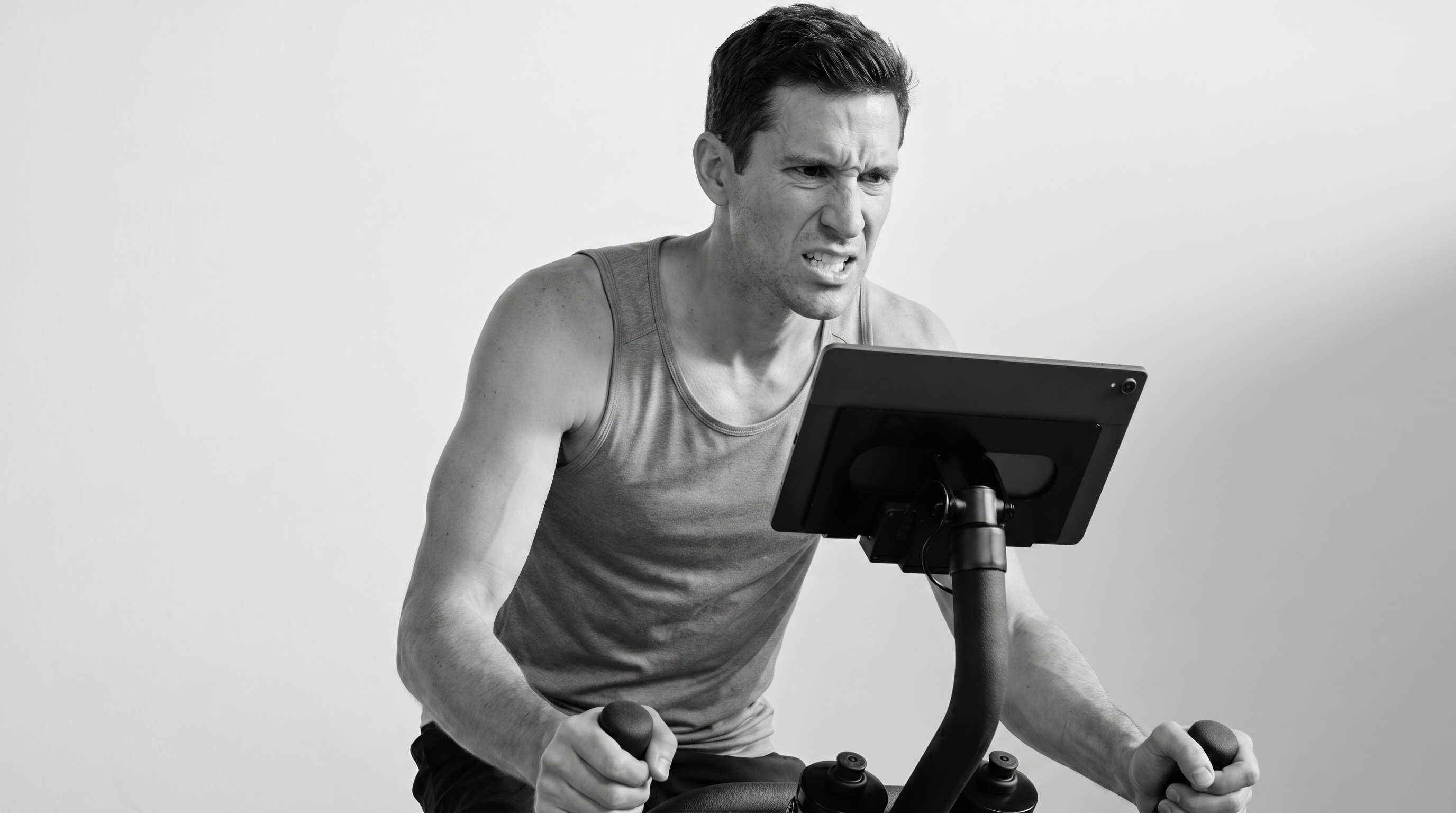
CAROL Bike, the only bike purpose-built for REHIT, uses AI to apply each rider’s precise optimal resistance at the exact moment of each sprint — ensuring the glycogen depletion stimulus is achieved every session regardless of fitness level.
Peer-reviewed research on REHIT using CAROL Bike demonstrates:
- VO₂max improvement of 12% in 8 weeks — greater than standard HIIT, in less time
- Reduction in type 2 diabetes risk by 62% in 8 weeks
- Reduction in resting blood pressure by 5 points in 8 weeks
- More calories burned in a 15-minute CAROL Bike session than a 30-minute run, due to significant afterburn (EPOC)
- Average leg strength increase of 13% over 8 weeks
Key characteristics of REHIT:
- Session duration: 5 minutes
- Intensity: supra-maximal (100%+ effort)
- Intervals: 2 sprints of 20 seconds
- Active sprint time per session: 40 seconds
- Weekly commitment: 3 sessions (15 minutes total)
Who it suits: Anyone seeking maximum cardiovascular and metabolic benefit from minimum time investment. Particularly effective for people who struggle to maintain consistent exercise habits, those with injuries that limit higher-impact training, and anyone optimising for longevity.
HIIT vs SIT vs REHIT: a direct comparison
| HIIT | SIT | REHIT | |
|---|---|---|---|
| Session length | 20–30 min | 20–30 min | 5 min |
| Sprint duration | 30 sec–4 min | 30 sec | 20 sec |
| Weekly time commitment | 60–150 min | 60–90 min | 15 min |
| Intensity | High | Supra-maximal | Supra-maximal |
| VO₂max improvement (8 weeks) | Up to 7.2% | Comparable to HIIT | Up to 12% |
| Suitability for all fitness levels | Moderate | Lower | High |
| AI-personalised | No | No | Yes (CAROL Bike) |
Which is most effective?
All three protocols outperform moderate-intensity steady-state cardio for VO₂max improvement and cardiovascular adaptation. The difference between them is not effectiveness in isolation — it is effectiveness relative to time invested.
HIIT is effective but requires a significant time commitment to achieve meaningful results. SIT reduces active exercise time but maintains a long total session time due to extended recovery intervals, and the demands of 30-second all-out sprints make consistent adherence difficult. REHIT delivers greater VO₂max improvement than either, in a total weekly time commitment of 15 minutes.
For people whose primary barriers to consistent cardio are time and adherence, which research suggests accounts for the majority of the population, REHIT represents the most practical and most effective solution the science currently supports.
Which is right for you?
Choose HIIT if: You enjoy varied, structured workouts and have 20–30 minutes available per session. HIIT is well-studied, accessible without specialist equipment, and suits people who want variety in their training.
Choose SIT if: You are comfortable with very high intensity effort and believe you can truly achieve supra-maximal intensity with each sprint. SIT requires no specialist equipment and can be performed on any stationary bike or track.
Choose REHIT if: You want the most time-efficient cardio protocol supported by peer-reviewed research. REHIT requires a purpose-built bike to deliver the precise AI-personalised resistance needed to achieve the supra-maximal stimulus in 20 seconds. CAROL Bike is the only bike designed and validated for this protocol.
Start your 100-day risk-free CAROL Bike trial now.