The phrase low-impact exercise machines tends to be read as a synonym for “gentle” — equipment for people who cannot, or should not, work hard. That is a misreading. Low impact describes the load on your joints, not the effort you put in. Done well, low-impact training can build the single fitness marker most strongly tied to a long, healthy life. At CAROL, we are guided by science, so here is what the evidence actually says about training hard while protecting your joints.
What counts as a low-impact exercise machine?
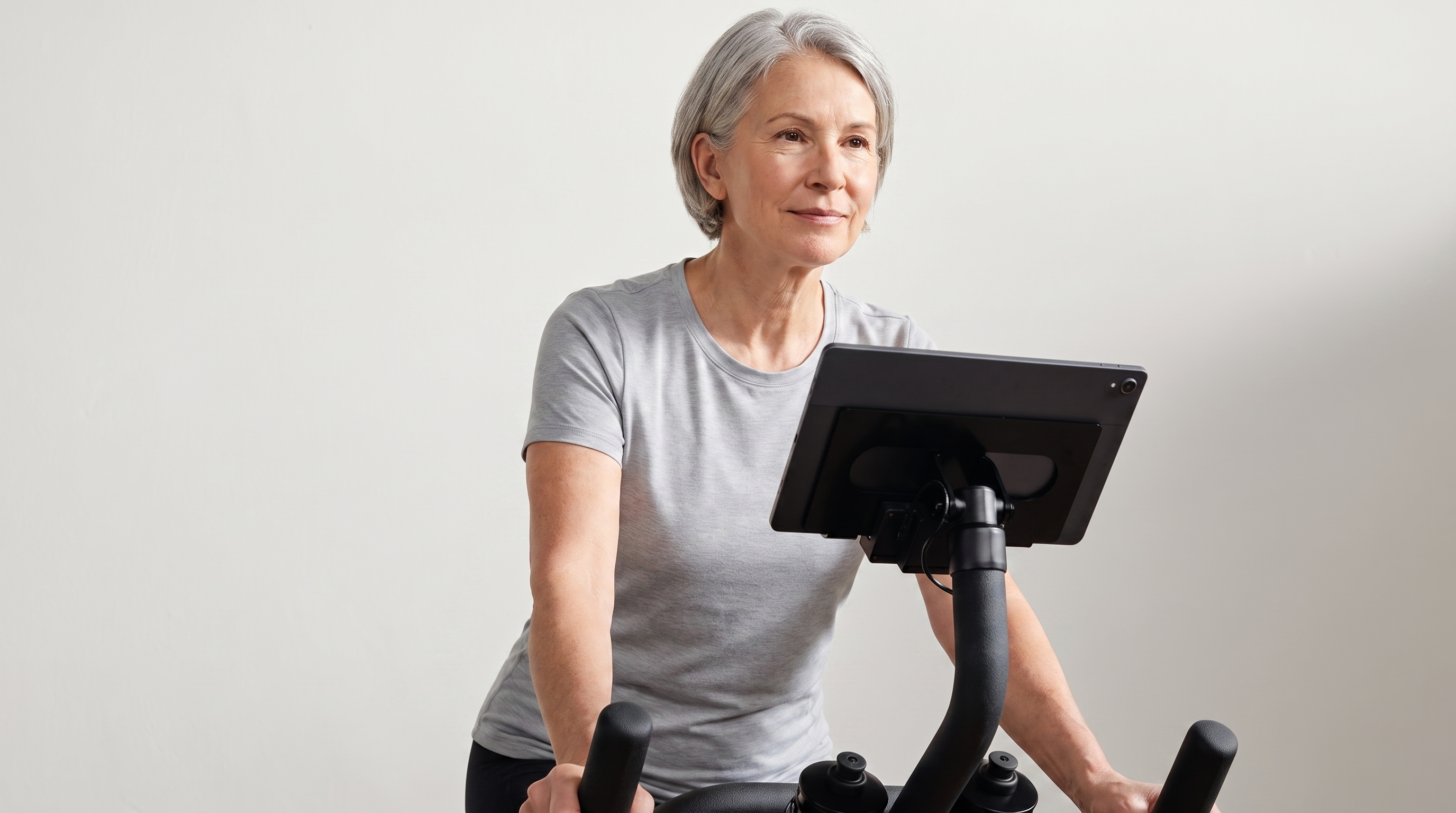
Low-impact machines are those that keep your feet, or your body, supported so that your joints never absorb the repeated shock of landing. The main options are the stationary or recumbent exercise bike, the elliptical or cross-trainer, the rowing machine and the seated step or arm ergometer. What they share is mechanics: your skeleton is supported, and your knees, hips, ankles and spine are spared the impact that running, jumping or high-impact classes impose with every stride.
This matters because the most common barrier to staying active later in life is not motivation but discomfort. If a workout aggravates a knee or a hip, you stop doing it. A machine that removes the impact removes that reason to quit.
Why joint load matters as you age
Joint problems are not a fringe concern; osteoarthritis is one of the most common conditions of mid and later life, and it tends to push people away from exactly the cardiovascular exercise that would help them most. The encouraging part is that low-impact machines do not just avoid harm — they actively help.
In adults with symptomatic knee osteoarthritis, a structured programme of stationary cycling improved both maximal oxygen uptake and quadriceps strength, and was well tolerated (Øiestad et al., 2023). In a separate trial of patients living with both knee osteoarthritis and type 2 diabetes, even higher-intensity stationary cycling proved feasible and significantly improved blood-sugar control, without worsening knee pain relative to gentler approaches (Su et al., 2024). The lesson is that a supported, low-impact machine lets people who could never tolerate running still train hard enough to change their health.
What you are really training: VO₂max
The reason to use any cardio machine is to raise your cardiorespiratory fitness — your body’s capacity to take in oxygen and deliver it to working muscles, measured as VO₂max, or maximal oxygen uptake. It is worth being precise about why this matters, because the stakes are higher than most people realise.
In a study of more than 122,000 adults, all-cause mortality fell steadily as fitness rose, with no observed upper limit to the benefit, and the least fit faced roughly five times the mortality risk of the fittest (Mandsager et al., 2018). A larger analysis of more than 750,000 individuals found the same inverse, graded relationship at every age — and concluded that being unfit carried a greater risk than any traditional cardiac risk factor examined, including smoking, diabetes and high blood pressure (Kokkinos et al., 2022). A low-impact machine is, in effect, a tool for moving yourself up that curve.
Low impact does not have to mean low intensity
Here is the point most often missed. The benefit of these machines is not that they let you go easy; it is that they let you go hard without paying for it in your joints.
Intensity does appear to matter for fitness. A meta-analysis of interval training in middle-aged and older adults found that interval approaches produced significantly greater gains in VO₂max than steady, moderate-intensity exercise, with both high-intensity interval training and sprint interval training outperforming the continuous alternative (Poon et al., 2021). A more recent review of adults aged 60 and over reached a similar verdict: high-intensity interval training matched moderate exercise across most health markers and, in the better-controlled studies, delivered larger improvements in cardiorespiratory fitness (Oliveira et al., 2024). And the trainability of the system is real even after years of inactivity — two years of structured training in previously sedentary adults raised VO₂max by around 18% and reversed part of the heart stiffening that accompanies sedentary ageing (Howden et al., 2018). A stationary bike is one of the few machines on which you can safely push to genuinely high intensity, because the support and the smooth resistance keep the effort in your legs and lungs rather than in your joints.
Why time-efficiency belongs in the comparison
A machine is only useful if you actually use it. This is why brevity is not a gimmick but a genuine advantage. A scoping review of short, intermittent bouts of activity — sometimes called “exercise snacks” — found them feasible and safe for adults and older adults, with the largest population studies linking small daily doses of vigorous activity to steep reductions in all-cause and cardiovascular mortality (Jones et al., 2024). The machine that fits your life is the one that earns the results.
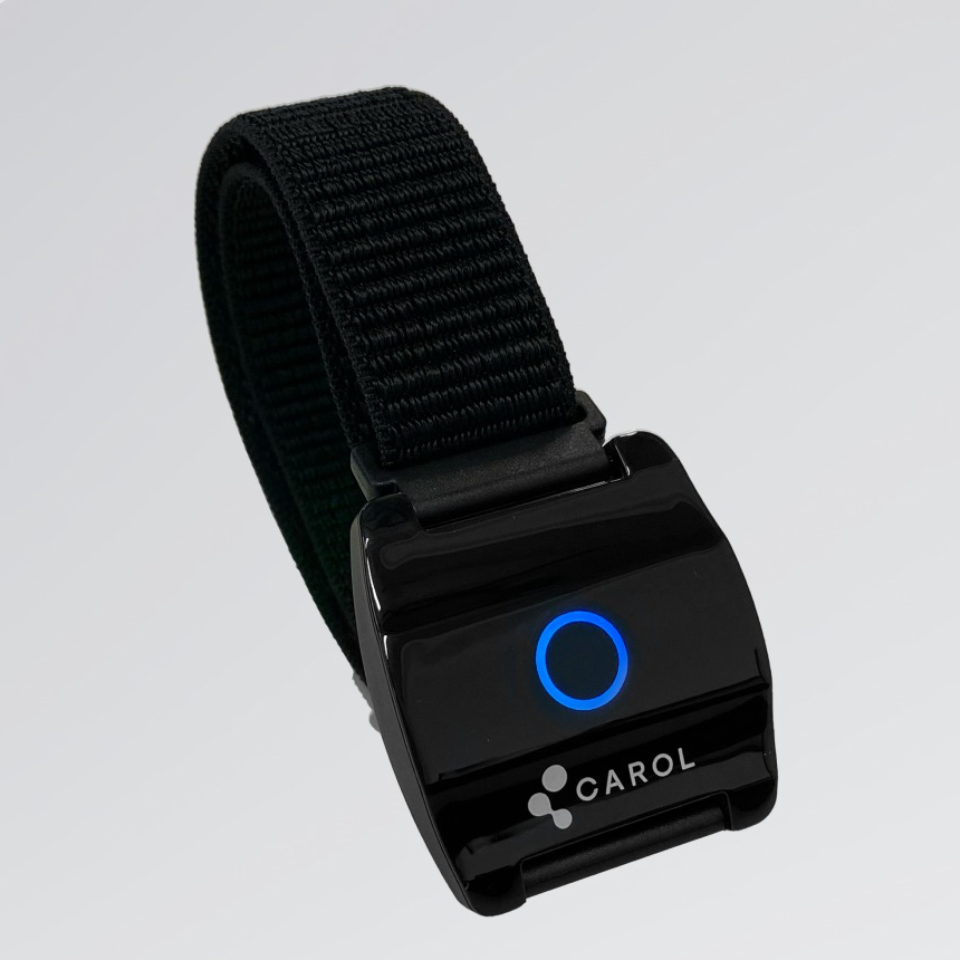
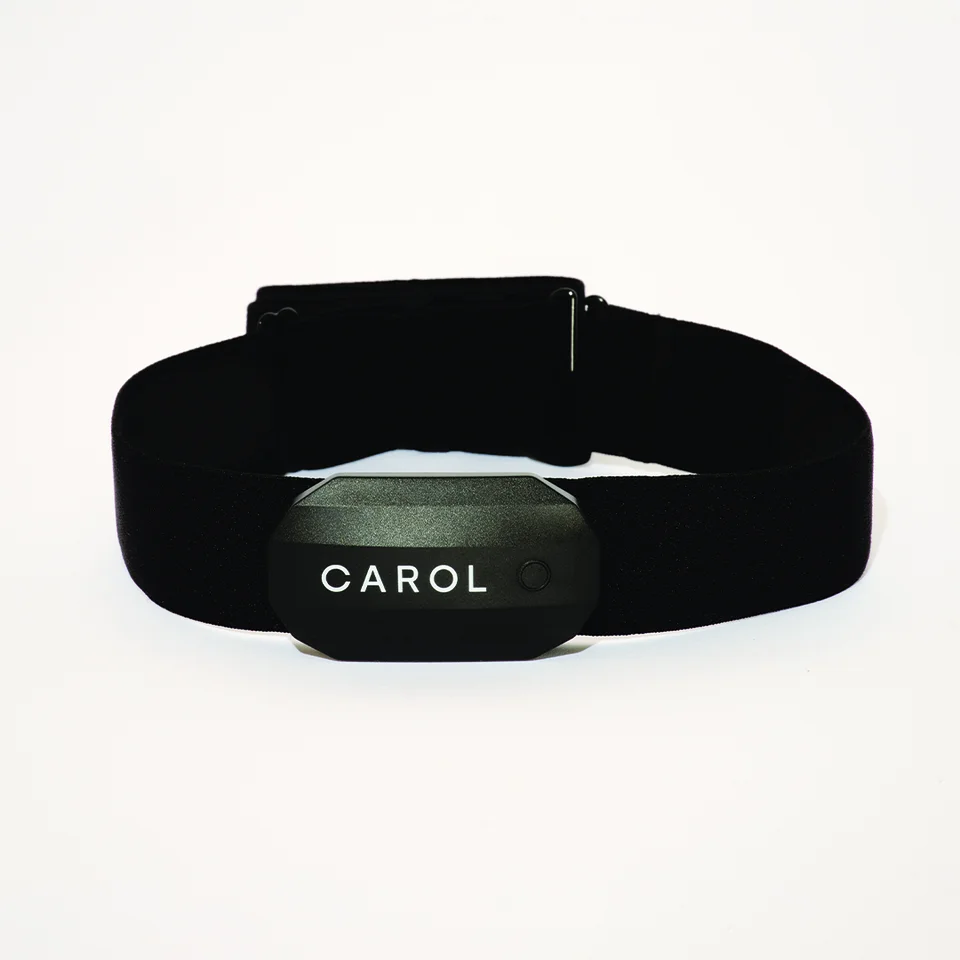
This is where CAROL’s approach comes in. REHIT — Reduced Exertion High-Intensity Interval Training — is a low-dose form of sprint interval training built around two 20-second all-out sprints, with the whole session, warm-up and cool-down included, fitting into single-digit minutes. It pairs the joint-sparing mechanics of a bike with the intensity the evidence rewards, in a dose small enough to keep doing. The effort is brief; the stimulus is not.
None of this overrides medical advice. If you are new to intense exercise, managing a joint or heart condition, or returning after a long break, it is sensible to speak to your doctor and to build intensity gradually from your own starting point rather than copying a generic plan.
The bottom line
Low-impact exercise machines are not a compromise. They are a way to train the fitness that most strongly predicts a long life while protecting the joints that have to carry you through it. The bike stands out among them because it lets you reach genuinely high intensity safely, and because protocols such as REHIT make that intensity achievable in minutes. Choose the machine you will keep using, push it harder than “gentle”, and let the evidence — not the impact — set your expectations.