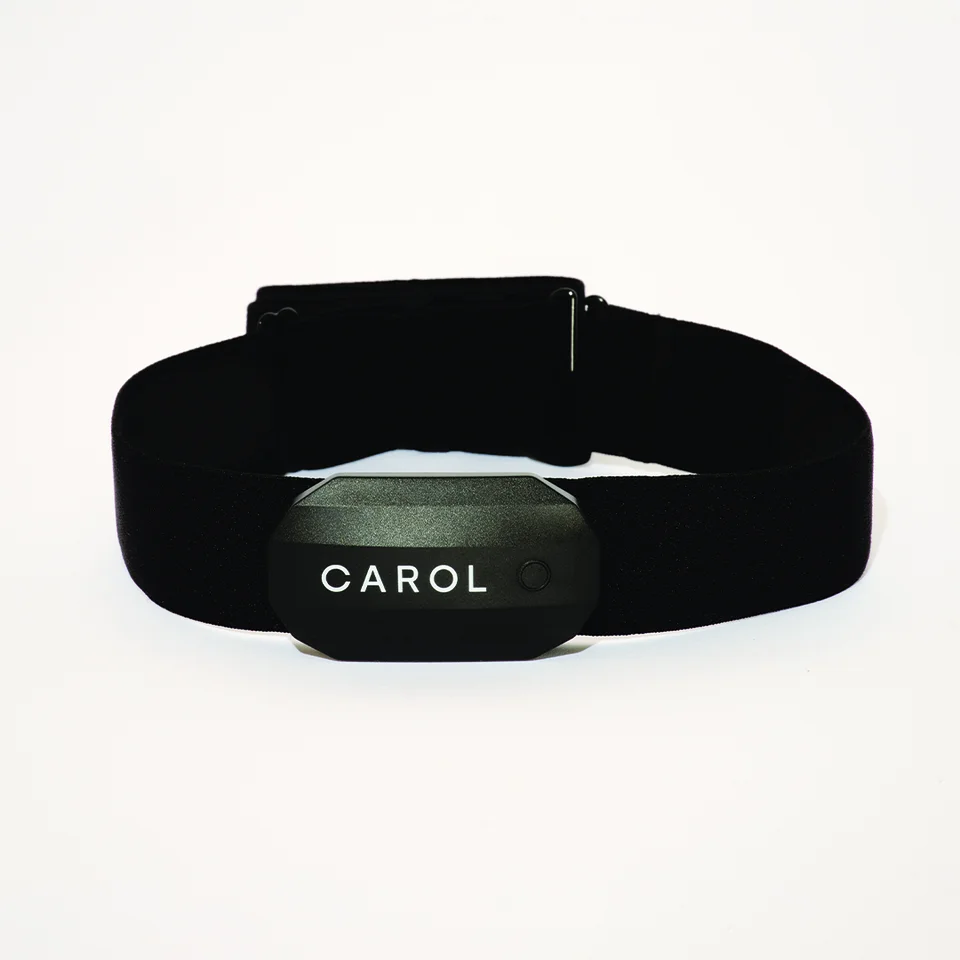
Ten thousand steps a day has become the default measure of a healthy life — the number on your watch face, the target your phone nudges you towards at nine in the evening. It is a reasonable habit to keep. It is also a number with a thinner evidence base than most people assume, and it answers only one of the two questions your body is asking.
Here is what the research actually shows about how many steps a day change your risk of dying early — and where the step count stops being the metric that matters.
Is 10,000 steps a real target?
Not one that came from research. The largest pooled analysis of the question opens by stating plainly that although 10,000 steps per day is widely promoted, there is little evidence to support the recommendation (Paluch et al., 2022). That meta-analysis combined 15 international cohorts — 47,471 adults and 3,013 deaths over a median 7.1 years of follow-up — and found something more useful than a round number.
Compared with the least active quarter of participants (median 3,553 steps a day), the risk of dying from any cause was 40% lower in the second quartile (5,801 steps), 45% lower in the third (7,842) and 53% lower in the fourth (10,901). But the curve flattened. Among adults aged 60 and over, the benefit levelled off between 6,000 and 8,000 steps a day. Among adults under 60, it levelled off between 8,000 and 10,000.
More steps are better, in other words — up to a ceiling that depends on your age, and one that most people over 60 reach well before their watch stops buzzing.
What does each extra thousand steps buy you?
The dose–response work is unusually consistent. A meta-analysis of 17 cohorts and 226,889 participants found that each additional 1,000 steps a day was associated with a 15% lower risk of all-cause mortality, and each 500-step increment with a 7% lower risk of cardiovascular death (Banach et al., 2023). An earlier pooled analysis of seven cohorts put the figure at 12% per 1,000 steps (Jayedi et al., 2022).
In a representative sample of 4,840 US adults aged 40 and over, followed for a mean of 10.1 years, taking 8,000 steps a day was associated with roughly half the mortality risk of taking 4,000 (hazard ratio 0.49), and 12,000 steps with a third of it (hazard ratio 0.35) — but step intensity added nothing once total volume was accounted for (Saint-Maurice et al., 2020).
Most of the gain sits at the bottom of the range. An umbrella review of 11 meta-analyses and 14 cohorts identified a protective threshold beginning at around 3,143 steps a day (Rodríguez-Gutiérrez et al., 2024). If you are currently sedentary, the walk from 2,000 to 5,000 steps is worth far more to you than the walk from 9,000 to 10,000.
Does walking faster matter?
Less than you would expect. Among 16,741 women with a mean age of 72, averaging 5,499 steps a day, faster cadence initially looked protective — but once total daily steps were accounted for, those associations attenuated and most lost statistical significance. Mortality fell progressively up to roughly 7,500 steps a day and then levelled, and as few as 4,400 steps was associated with meaningfully lower mortality than 2,700 (Lee et al., 2019).
The evidence is not entirely unanimous: Paluch’s pooled analysis did find a modest independent signal for peak 30-minute cadence after adjusting for volume. But taken together, the picture is that for walking, how many steps you take matters more than how briskly you take them.
That is a statement about walking pace, though — not about exercise intensity in general. Those are different questions, and they have different answers.
Why your step count cannot tell you how fit you are
Steps measure movement volume. They do not measure cardiorespiratory fitness — your VO₂max, or the maximum amount of oxygen your body can use during intense exercise. And VO₂max is the marker with the strongest link to how long you live.
An overview of meta-analyses covering 199 cohort studies and more than 20.9 million observations found that people with high cardiorespiratory fitness had roughly half the all-cause mortality risk of those with low fitness (hazard ratio 0.47), with every 1-MET increase associated with an 11–17% reduction in all-cause mortality and an 18% reduction in incident heart failure (Lang et al., 2024).
Walking at a comfortable pace rarely takes you close to the intensities that raise that ceiling. In middle-aged and older adults, interval training raised VO₂max by 2.26 ml/kg/min against 1.34 ml/kg/min for moderate-intensity continuous training — a between-group difference of 1.10 ml/kg/min in favour of intervals, and 1.18 for sprint interval training specifically (Poon et al., 2021).
What short sprints add that steps cannot
REHIT — reduced-exertion high-intensity interval training — is built on exactly this gap. In the original trial, sedentary men and women completed three 10-minute cycling sessions a week for six weeks: gentle pedalling with brief all-out sprints, built up from 10 seconds to 20 seconds over the programme. VO₂max rose 15% in men and 12% in women, and insulin sensitivity rose 28% in the men. Average perceived exertion was 13 out of 20 — “somewhat hard” (Metcalfe et al., 2012). CAROL’s signature workout applies the same principle in around five minutes, with two 20-second all-out sprints.
Individual response varies, and we recommend REHIT is individualised for each person. But the mechanism is not in dispute: raising your aerobic ceiling requires spending time near it, and no volume of comfortable walking will get you there.
How to use both
- Treat steps as your daily movement floor. Aim for 6,000–8,000 if you are over 60, and 8,000–10,000 if you are younger. Below about 3,000, the only priority is more.
- Do not expect them to raise your VO₂max. That requires short periods of genuinely hard effort, two or three times a week.
- Read the number as a habit signal, not a fitness score. A consistent 7,000 tells you something useful about your week. It tells you very little about your heart and lungs.
The bottom line
How many steps a day do you need? Fewer than the number you have been given. The mortality curve flattens between 6,000 and 8,000 steps for adults over 60, and between 8,000 and 10,000 for those under 60, and the steepest returns come at the low end — the first few thousand steps out of sedentary matter more than the last thousand into five figures.
But steps answer only the question of how much you move. They say nothing about how much oxygen your body can use when it is working hard, which is the measure most closely tied to your lifespan. Walking builds the floor. Something briefer and harder raises the ceiling. You want both.
This article is for general information and is not medical advice. If you have a heart condition or have been inactive for a long period, speak to your doctor before starting high-intensity exercise.