If you want to lose belly fat, the exercise that gets least airtime may be the one that works best. Anaerobic exercise — short, hard efforts that leave you genuinely out of breath — has a growing body of evidence behind it for reducing abdominal fat, and it does so in a fraction of the time steady cardio asks for. Here is what the research actually shows, and why the fat around your middle deserves your attention in the first place.
What counts as anaerobic exercise?
Aerobic exercise is anything you can sustain for a long time at a steady, conversational pace — a jog, an easy ride, a brisk walk. Anaerobic exercise sits at the other end: efforts so intense your body cannot supply enough oxygen to keep up, so it draws on stored energy in your muscles instead. Sprinting, heavy lifting and all-out interval efforts are all anaerobic.
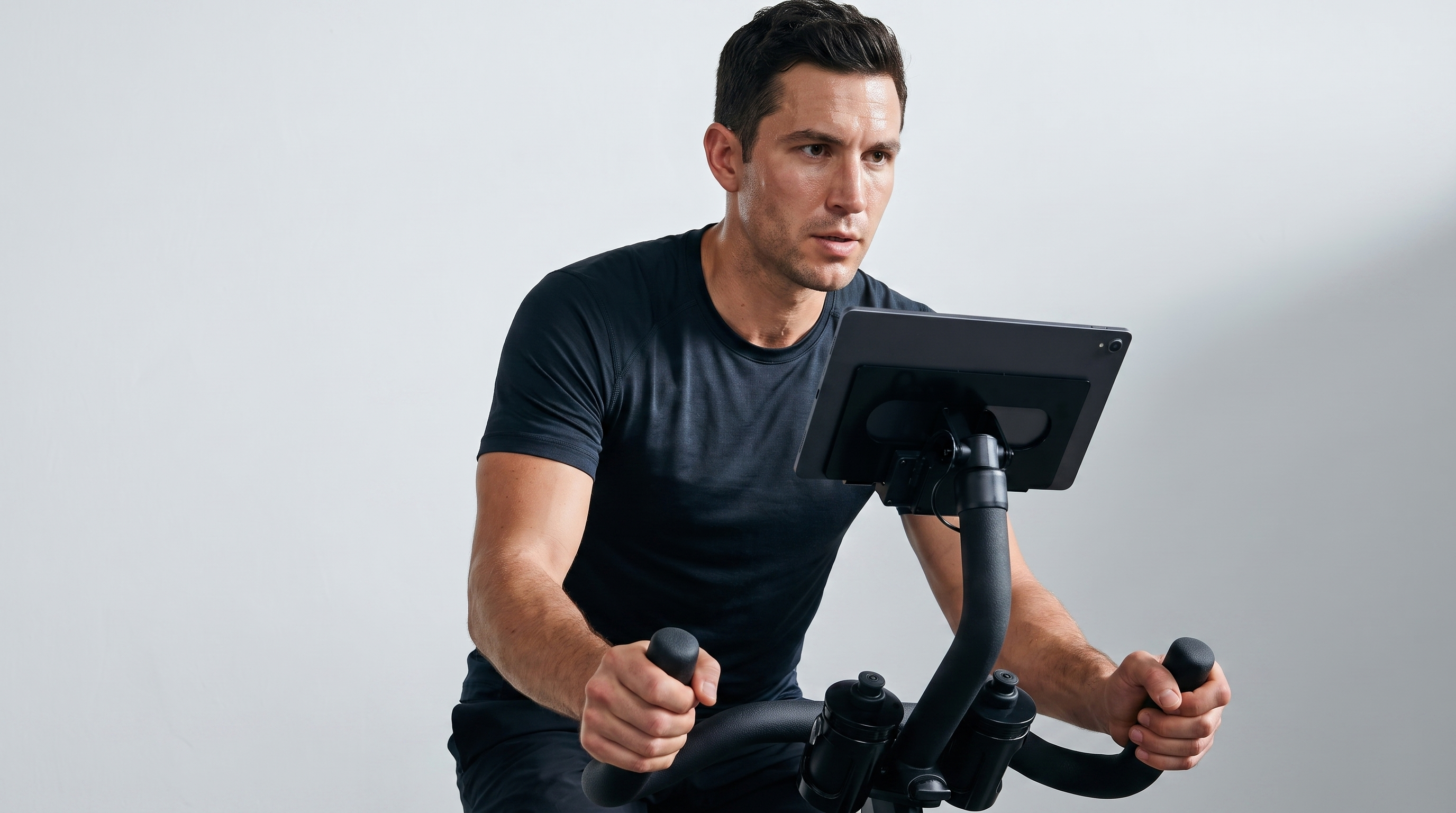
In practice, the anaerobic training studied for fat loss usually takes the form of interval work: high-intensity interval training (HIIT) or sprint interval training (SIT), where you alternate short, hard bursts with recovery. REHIT — Reduced Exertion High-Intensity Interval Training, CAROL’s signature protocol of two 20-second all-out sprints inside a short session — is one of the most time-efficient forms of anaerobic exercise there is.
Why belly fat deserves your attention
Not all belly fat is the same. Subcutaneous fat sits just under the skin, while visceral fat is packed deep around your organs. Visceral fat is the more concerning of the two: it is metabolically active and closely linked to insulin resistance and cardiometabolic risk. That is why waist circumference and abdominal fat, rather than weight alone, are the numbers worth watching — and why an exercise strategy that shifts them matters for your long-term health, not just how you look.
Can you target belly fat directly?
It is worth being honest here: you cannot spot-reduce fat. Endless crunches will strengthen the muscles beneath your abdomen, but they will not selectively burn the fat sitting on top of them. Fat loss happens across the whole body in response to the energy your training demands and the metabolic changes it drives. The good news is that abdominal fat — visceral fat in particular — appears to be among the more responsive depots when the training stimulus is intense enough.
What the evidence says about anaerobic exercise and abdominal fat
The most comprehensive synthesis to date is a 2024 umbrella review with meta-analysis in Sports Medicine, pooling 16 systematic reviews and 79 randomised trials. Interval training produced significantly greater reductions in total body-fat percentage than moderate-intensity continuous training, and significant reductions specifically in visceral, subcutaneous abdominal and android (belly-region) fat compared with no exercise. The effects were most pronounced with cycling, with programmes of 12 weeks or longer, and — notably — with low-volume protocols using under 15 minutes of hard exercise per session (Poon et al., 2024, https://doi.org/10.1007/s40279-024-02070-9).
A head-to-head trial makes the intensity point starkly. When obese young women completed 12 weeks of cycling, sprint and high-intensity interval groups cut their abdominal visceral fat area by more than 15 cm², while a moderate-intensity continuous group managed under 3.5 cm² — despite the sprint group doing less total work (Zhang et al., 2020, https://doi.org/10.1111/sms.13803). Intensity, not duration, drove the result.
Two further analyses point the same way. A meta-analysis comparing HIIT with moderate continuous training in young and middle-aged adults found HIIT produced greater improvements in waist circumference, percentage body fat and VO₂max (Guo et al., 2023, https://doi.org/10.3390/ijerph20064741). A network meta-analysis of adults with overweight or obesity ranked HIIT as the most effective modality for reducing waist circumference — by almost 6 cm on average — along with body-fat percentage and triglycerides, while also delivering the largest VO₂max gains (Wang et al., 2024, https://doi.org/10.3389/fendo.2023.1294362).
The pattern holds across populations. In adults with type 2 diabetes, eight to twelve weeks of thrice-weekly cycling HIIT reduced visceral fat in four of five randomised trials reviewed (Delgado et al., 2025, https://doi.org/10.70252/YEUF2363). And in men with overweight or obesity, a 12-week programme reduced abdominal and visceral fat whether the intervals were performed on a bike or running (Couvert et al., 2024, https://doi.org/10.1249/MSS.0000000000003376).
Why short, hard efforts work
There is a paradox worth understanding: an all-out sprint burns very little fat during the effort itself, because your muscles are running mainly on glucose. The fat loss comes afterwards. Intense exercise elevates your metabolic rate for hours into recovery — a phenomenon known as excess post-exercise oxygen consumption, or EPOC — and it is during this recovery window that fat oxidation rises. Mechanistic work in animals has shown that high-intensity training raises post-exercise oxygen consumption and fat oxidation, and reduces visceral fat over time through this recovery-phase effect rather than through fat burned in the session (Cheng et al., 2024, https://doi.org/10.1186/s12944-024-02397-2). It is a useful reminder that what a workout does to your body in the 24 hours afterwards can matter more than the calories on the display.
How much do you actually need?
The encouraging finding from the evidence is that more is not necessarily better. The Sports Medicine umbrella review found low-volume protocols — under 15 minutes of genuine high-intensity work per session — among the most effective for reducing adiposity (Poon et al., 2024, https://doi.org/10.1007/s40279-024-02070-9). What is not optional is the intensity. The trials that moved visceral fat the most were the ones where the hard efforts were genuinely hard. Two to three sessions a week, sustained across two to three months, is the pattern that recurs throughout this research.
Where REHIT fits
REHIT was designed around exactly this principle: deliver a maximal stimulus in the shortest honest time. Two 20-second all-out sprints demand the anaerobic, glycolytic effort the fat-loss evidence keeps pointing to, and the cycling modality is the one the umbrella review singled out as most effective. It will not let you choose where the fat comes off — nothing can — but it applies the kind of intensity that the research associates with reductions in abdominal and visceral fat, without asking for the hours that steady cardio does. As with any training, results vary between individuals, and exercise works best alongside sensible nutrition and sleep.
The bottom line
Anaerobic exercise — short, intense interval work — is one of the most time-efficient tools for reducing belly fat, and the evidence consistently favours it over steady moderate cardio for shrinking waist circumference and visceral fat. You cannot target the fat directly, and the intensity has to be real. But if the effort is there, a handful of hard minutes a few times a week can do what hours of gentler exercise struggle to.
This article is for general information and is not medical advice. If you have a health condition or are new to intense exercise, check with a qualified professional before starting.