VO₂max, or maximal oxygen uptake, is the maximum amount of oxygen your body can take in and use during intense exercise. It is one of the strongest predictors of how long you will live — and one of the least measured. Most people never have it tested, and many of those who think they have are looking at an estimate several steps removed from the real thing.
Here is how VO₂max is actually measured, from laboratory gas analysis down to the number on your wrist, and how much confidence each method deserves.
Why measuring VO₂max is worth the trouble
The American Heart Association devoted an entire scientific statement to the argument that cardiorespiratory fitness should be treated as a clinical vital sign, alongside blood pressure and heart rate. Its conclusion was blunt: fitness may be a stronger predictor of mortality than smoking, hypertension, high cholesterol or type 2 diabetes, and adding it to conventional risk factors meaningfully improves how accurately risk is classified (Ross et al., 2016).
The size of the effect is easy to underestimate. In 1,080 adults aged 50 to 96 followed in the Baltimore Longitudinal Study of Aging, all-cause mortality risk was 66% lower in the highest quartile of measured VO₂max than in the lowest, after adjustment (Schumacher et al., 2023). That word — measured — is doing a lot of work, and it is the reason the method matters.
The gold standard: a graded test with gas analysis
The reference method is cardiopulmonary exercise testing. You ride a bike or run on a treadmill while the workload climbs steadily, wearing a mask that measures the oxygen you breathe in and the carbon dioxide you breathe out, breath by breath, until you cannot continue. Your VO₂max is the point at which oxygen uptake stops rising even though the workload keeps increasing — a plateau.
That plateau is the only unambiguous evidence you have reached your true maximum. The difficulty is that modern ramp protocols, which are quicker and better suited to clinical use, frequently fail to produce one. When no plateau appears, testers fall back on so-called secondary criteria: a respiratory exchange ratio above some threshold, a percentage of predicted maximum heart rate, a blood lactate value. The thresholds are chosen somewhat arbitrarily and are often reached well below your actual VO₂max, which can result in what one review described as grossly inaccurate estimation (Poole and Jones, 2017).
This matters most for exactly the people who most need testing. A trained athlete will push to genuine exhaustion. Someone new to hard exercise, or living with a health condition, will often stop before their physiology does — and the test then records their tolerance for discomfort rather than their aerobic ceiling (Schaun, 2017).
The fix most labs still skip: the verification phase
The solution is a second short test. After a rest, you perform a constant, very hard effort at roughly 110% of the peak workload you reached on the first test. If your oxygen uptake does not exceed the first result, the first result was real (Poole and Jones, 2017).
A systematic review of 43 studies, 30 of which were pooled for meta-analysis, found the verification phase produced essentially the same group average as the initial test — a mean difference of −0.00 L/min (95% CI −0.03 to 0.03). But the picture at the level of the individual was far less settled: the proportion of participants who recorded a higher value in the verification phase ranged from 0% to 88.9% across studies (Costa et al., 2024). Group averages, in other words, are trustworthy. Your personal number is a little less so. If you are paying for a lab test, it is worth asking whether a verification bout is included.
Submaximal cycle tests: most of the accuracy, none of the agony
You do not have to reach exhaustion to get a defensible number. Submaximal tests exploit a reliable relationship: for a given rise in power output, a fitter heart rate rises less. Measure how much your heart rate changes between two known workloads, factor in age and sex, and VO₂max can be estimated.
The Ekblom-Bak test does this with two four-minute stages — one at a standard 30 W, one at an individually chosen higher power. In its original validation across 143 adults aged 21 to 65, spanning inactive to highly active, estimated and measured VO₂max correlated at r = 0.91, with a coefficient of variation of 9.3%. The long-established Åstrand test, measured in the same participants, came in at 18.1% (Ekblom-Bak et al., 2014). A revised equation improved this further to a coefficient of variation of 8.7%, validated across ages 20 to 86 and fitness levels from 19 to 76 ml/kg/min (Björkman et al., 2016).
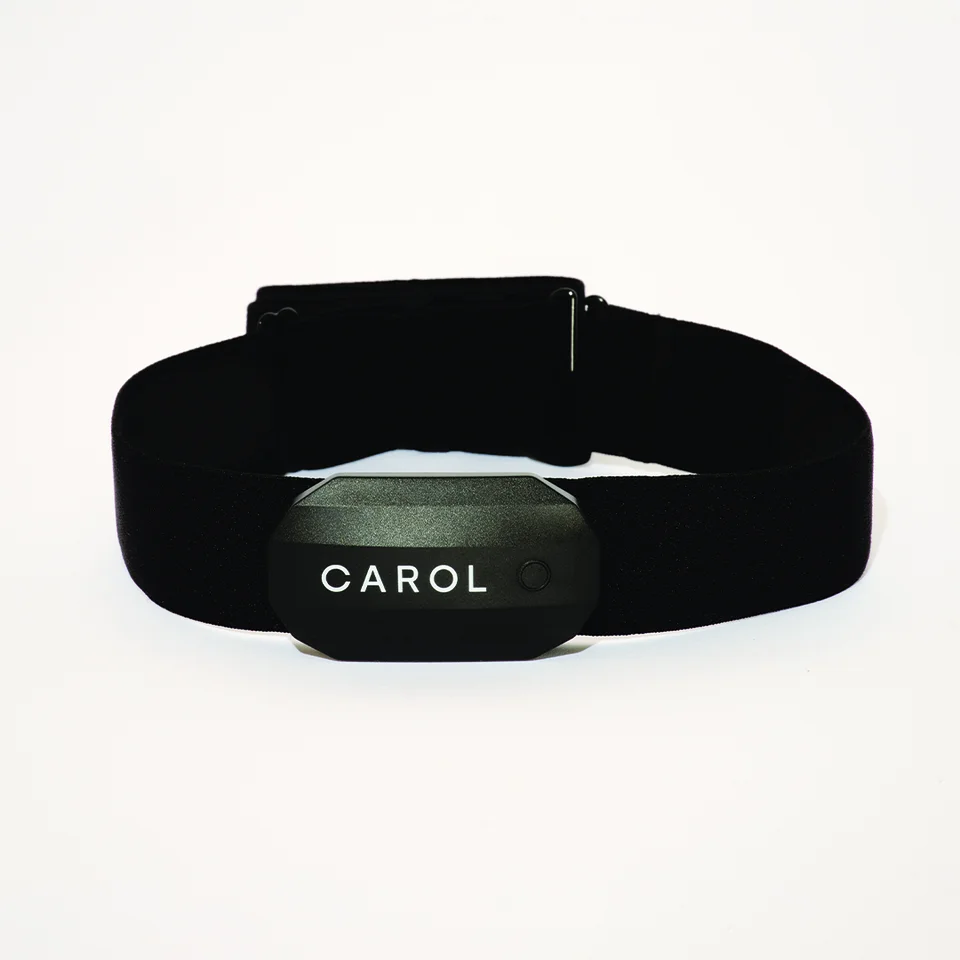
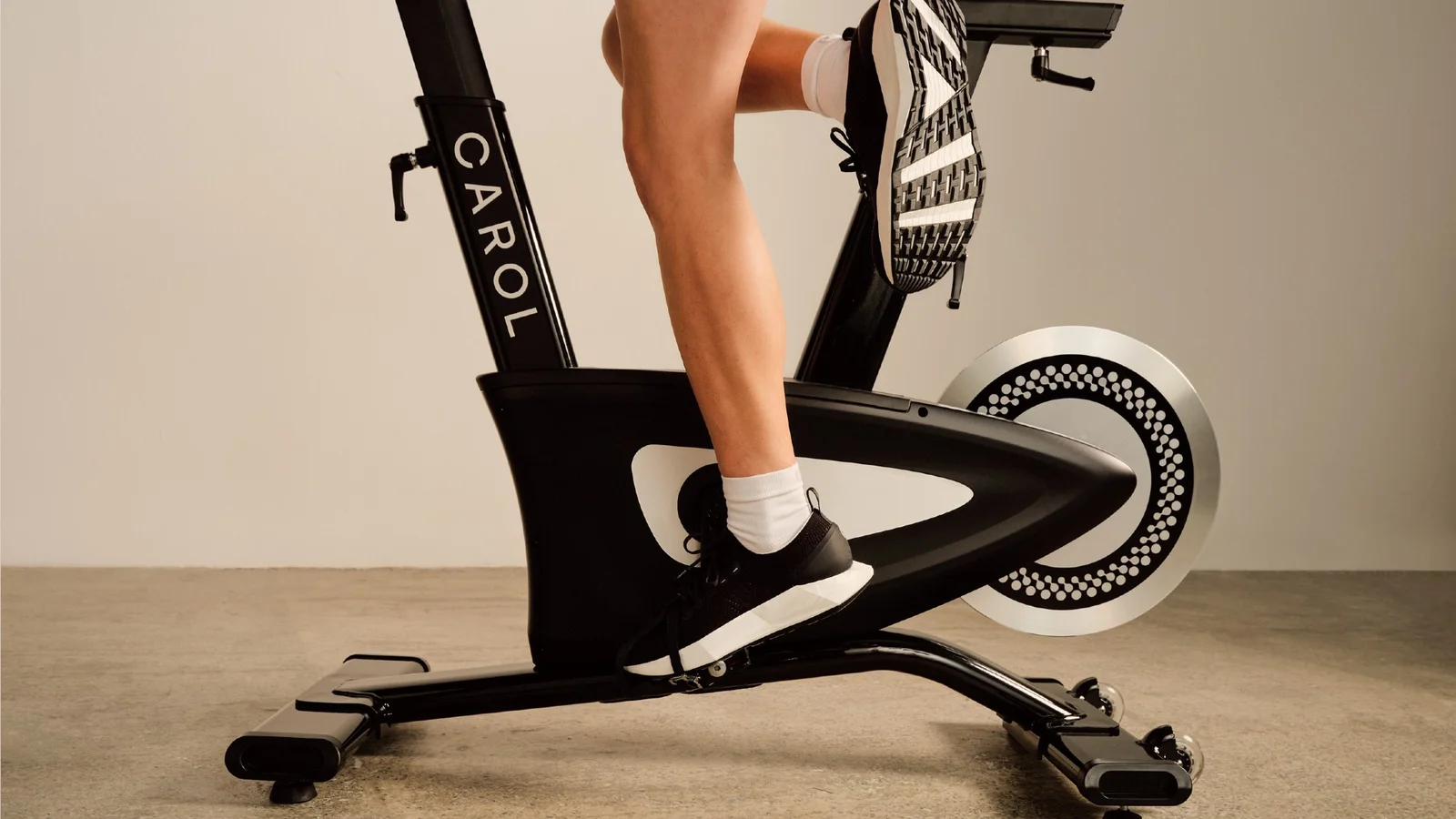
Roughly 9% error is not laboratory precision, but it is close enough to track real change, and it requires eight minutes of moderate cycling rather than a maximal effort in a mask. This is the method behind CAROL’s own VO₂max test, which uses a four-minute warm-up at 30 W followed by four minutes at a personalised submaximal target power.
Field tests: the 12-minute run and the bleep test
Field tests need nothing but space. Cooper’s 12-minute run scores you on distance covered; the multistage 20-metre shuttle run — the bleep test — scores you on how long you last as the beeps speed up.
Both are highly repeatable. Across 60 adults completing three trials of each, reliability was excellent (φ = 0.96). Validity was the weaker point. Against treadmill testing with gas analysis, the 12-minute run underestimated VO₂max in less fit participants and overestimated it in fitter ones — an error that changes direction depending on where you sit. The shuttle run read low overall, but with a consistent bias across fitness levels, which arguably makes it the more useful of the two (Penry et al., 2011).
Equations and wearables: the convenient guess
At the far end sit non-exercise prediction equations, which estimate VO₂max from age, sex, body composition and self-reported activity without any test at all. Assessed against measured values in older adults, published equations produced root mean square errors of 4.2 to 20.4 ml/kg/min. Recalibrating them tightened this to 3.9–4.2, but the predicted values were not robust once basic demographics were adjusted for — largely because those same demographics generated the prediction (Schumacher et al., 2023). The equation is, to a degree, telling you your age back.
Your watch sits in similar territory, blending heart rate and pace or power into an algorithmic estimate. It is useful for direction of travel and unreliable as an absolute. We have covered how accurate fitness trackers really are for VO₂max separately.
What your number means once you have it
A VO₂max figure means nothing without a reference point. The FRIEND registry provides one: 22,379 tests from 34 US laboratories, covering ages 20 to 89, with percentiles by age and sex. Across six decades, the median declined by an average of 13.5% (4.0 ml/kg/min) per decade on the treadmill and 16.4% (4.3 ml/kg/min) on the bike (Kaminsky et al., 2022). Cycle values run lower than treadmill values for the same person, so compare like with like and retest on the same equipment. Our guide to VO₂max by age covers what counts as a good score.
The decline is not fixed. In previously sedentary adults, REHIT — reduced-exertion high-intensity interval training, built around two brief all-out sprints that built up to 20 seconds each — raised VO₂max by 15% in men and 12% in women across six weeks of three sessions per week (Metcalfe et al., 2012). That is comfortably more than a decade’s worth of typical decline, recovered in six weeks.
The bottom line
A graded test with gas analysis and a verification bout is the only way to know your VO₂max rather than approximate it, and it is worth doing once if you can. Short of that, a submaximal cycle test lands within roughly 9% and asks very little of you — a good trade for most people, most of the time. Field tests are serviceable but skew at the extremes of fitness. Equations and wrist estimates are best read as trends, not measurements.
Whichever you choose, the discipline is the same: pick one method, use the same protocol and the same equipment each time, and watch the direction of travel rather than the decimal place. The number matters less than whether it is going up.