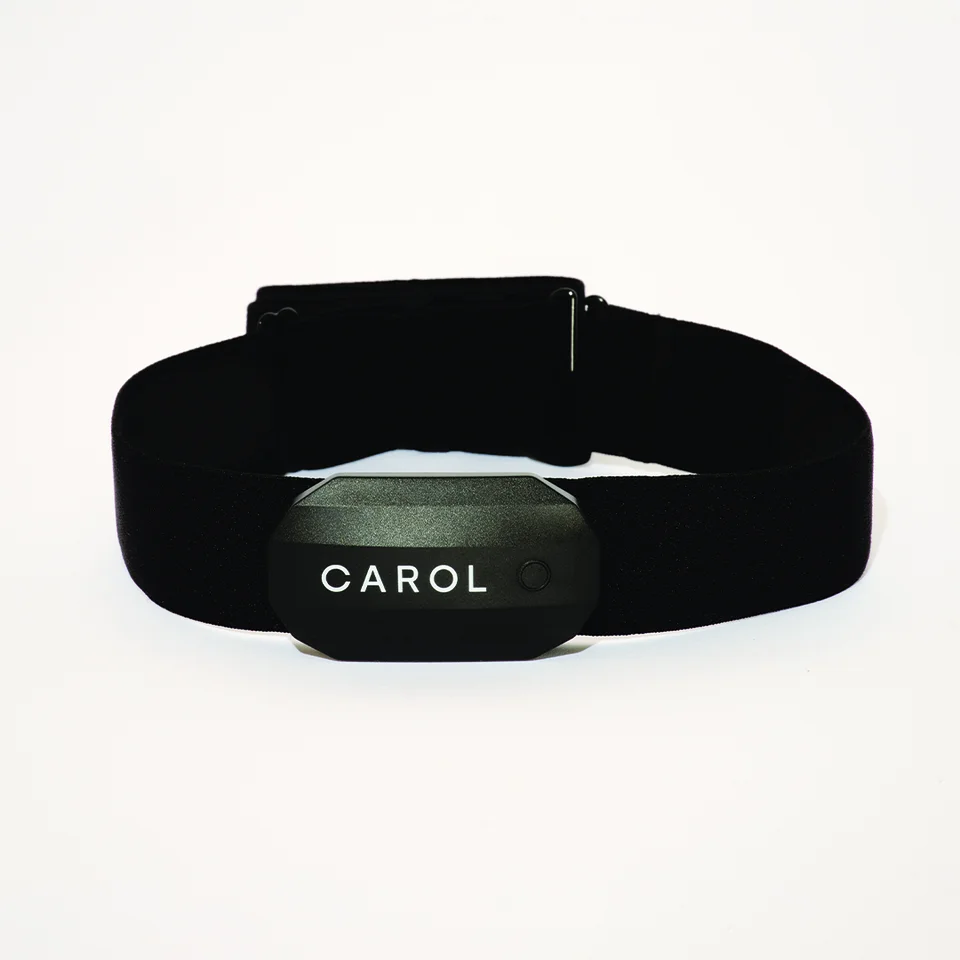
Your heart rate climbs the moment you start working hard. What happens in the minute after you stop is just as telling — and, it turns out, a good deal more revealing about your health. That drop is called heart rate recovery, and a growing body of evidence links it to how long and how well you are likely to live.
At CAROL, we’re guided by science, so it is worth understanding what heart rate recovery actually measures, what a healthy figure looks like, and whether you can move the needle. The short answer to the last question is yes — and the way you train matters more than the hours you put in.
What is heart rate recovery?
Heart rate recovery is simply how far your heart rate falls in the first minute or two after you stop exercising. If your heart rate peaks at 170 beats per minute and reads 150 one minute later, your one-minute recovery is 20 beats.
The reason it matters comes down to your autonomic nervous system — the automatic controller that speeds your heart up and slows it down. During hard effort, your body dials back the “rest and digest” vagal (parasympathetic) brake and ramps up the sympathetic accelerator. When you stop, a healthy system reverses this quickly: the vagus nerve reactivates and your heart rate falls sharply. A review of the mechanisms describes recovery as having two phases — a fast early fall driven mainly by that vagal reactivation, and a slower decline governed by sympathetic withdrawal (Peçanha et al., 2014). A brisk recovery is a sign that this switching happens as it should.
Why heart rate recovery matters for longevity
The landmark work came from the Cleveland Clinic. Following 2,428 adults for six years, researchers found that a slow one-minute recovery — a fall of 12 beats per minute or fewer — was a powerful predictor of death from any cause, with a fourfold higher risk in the simple analysis and roughly double the risk even after adjusting for age, fitness, medications and heart-scan findings (Cole et al., 1999). Crucially, that signal held independently of how hard people could exercise.
Later evidence has broadened the picture. A meta-analysis pooling nine cohort studies and more than 40,000 people found that a blunted heart rate recovery was associated with a 68% higher risk of all-cause mortality and a 69% higher risk of cardiovascular events, with each 10-beat reduction in recovery linked to a measurable rise in risk (Qiu et al., 2017). A Finnish study went further, showing that heart rate recovery and cardiorespiratory fitness together predicted sudden cardiac death independently of the heart’s pumping strength (Hernesniemi et al., 2020).
The link is not confined to the heart. In more than 2,000 healthy men followed for five years, those in the lowest quartile of heart rate recovery were almost three times as likely to develop type 2 diabetes as those in the highest, with each additional beat of recovery associated with a 2–3% lower risk (Jae et al., 2016). Recovery, in other words, is a window onto whole-body health.
What counts as a good heart rate recovery?
There is no single perfect number, because recovery depends on how hard you pushed, your age and the exact timing of the measurement. But the research offers useful anchors. In the Cleveland Clinic work, a one-minute fall of 12 beats per minute or fewer after a graded test was the threshold for “abnormal” (Cole et al., 1999). Many active people see one-minute drops well above 20 beats, and recovery continues over the second and third minutes.
You can estimate your own. After a genuinely hard effort — a hill, a sprint interval, or a fitness test — note your peak heart rate, stop, stay upright, and check your heart rate again exactly 60 seconds later. The difference is your one-minute recovery. Track it over weeks rather than reading too much into a single session: hydration, heat, sleep and caffeine all nudge the figure. If your recovery is consistently sluggish, it is worth raising with a doctor, particularly if you have other cardiac risk factors.
Can you improve your heart rate recovery?
This is where the news is genuinely encouraging: heart rate recovery responds to training. In an eight-week trial, sedentary adults doing low-volume, high-intensity interval work improved their two-minute recovery by around 19% — roughly a 9.5-beat gain — while a group doing longer, moderate, continuous sessions saw no significant change. The interval group also raised their VO₂max (maximal oxygen uptake — the maximum amount of oxygen your body can use during intense exercise) by 22%, compared with 15% for the longer sessions, despite training for less than half the time (Matsuo et al., 2014).
A separate study in inactive adults with overweight or obesity found that regular aerobic exercise improved one-minute recovery, and that the gains tracked closely with improvements in cardiorespiratory fitness — and with weight loss, where it occurred (Höchsmann et al., 2019). Two threads run through this evidence. First, the driver of a better recovery is a fitter cardiovascular system, not the exercise itself in isolation. Second, intensity does a lot of the work: pushing hard enough to genuinely challenge your heart appears to matter more than accumulating easy minutes.
How REHIT fits in
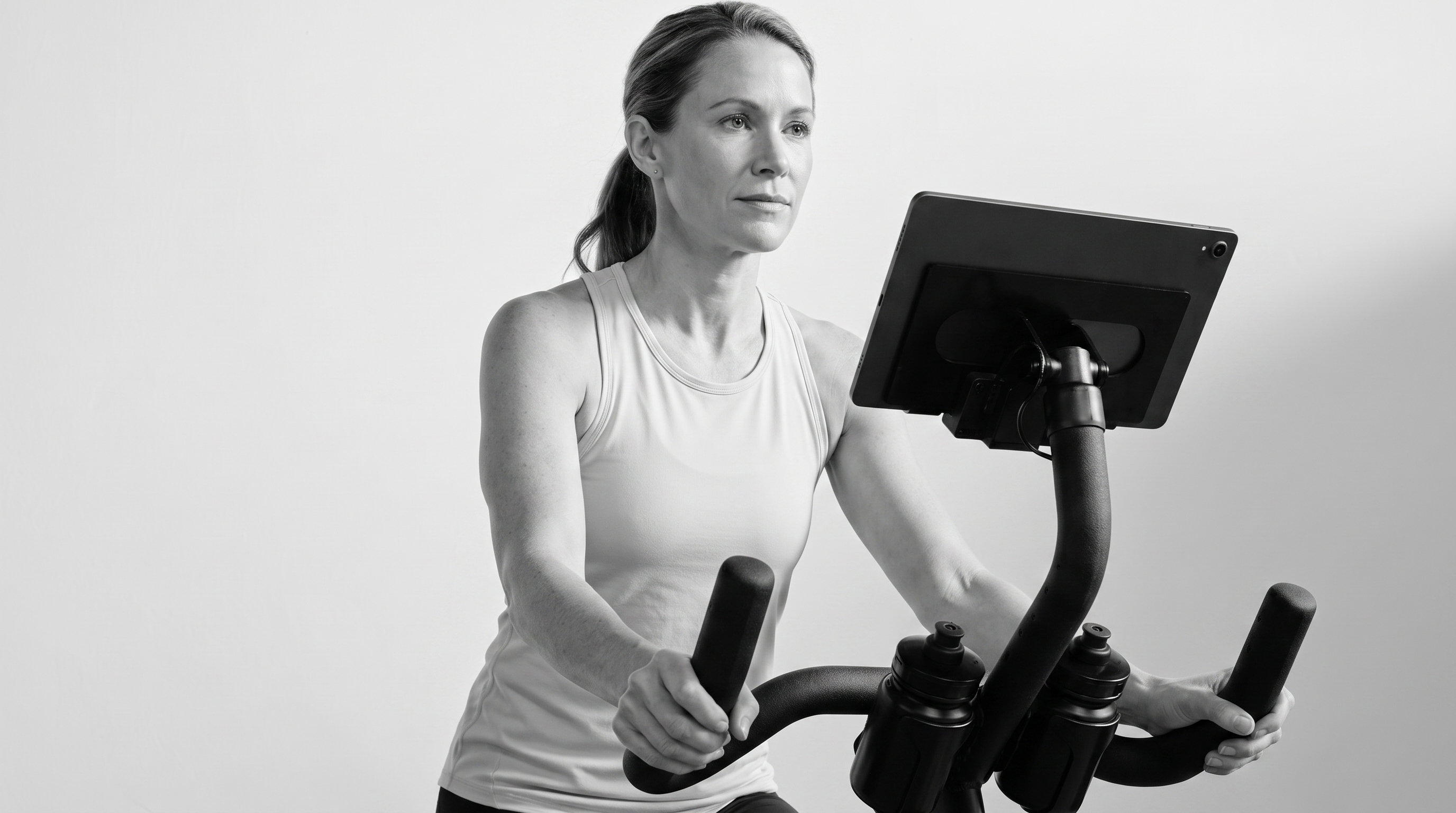
If fitness is the lever that moves heart rate recovery, the practical question is how to raise fitness efficiently. That is the logic behind REHIT — Reduced Exertion High-Intensity Interval Training — CAROL’s signature approach, built around two 20-second all-out sprints inside a session of around five minutes.
We should be honest about the limits of the evidence: the interval studies above used a range of low-volume, high-intensity protocols rather than REHIT specifically, so we cannot point to a trial that measured heart rate recovery after two 20-second sprints. What the research does show is a consistent chain: short, hard interval training raises VO₂max, and a higher cardiorespiratory fitness is tightly bound to a faster recovery. Heart rate recovery is itself used by researchers as a simple, accessible marker of that fitness (Thomas et al., 2022). Improve the fitness and the recovery tends to follow. As with all training, individual responses vary, and we recommend REHIT is individualised to each person.
The bottom line
Heart rate recovery is one of the most informative numbers you are not measuring. A quick fall in the minute after hard effort reflects a responsive nervous system and a fit heart, and a sluggish one is a well-documented signal of raised risk — for cardiovascular events, for diabetes and for mortality overall. The reassuring part is that it is trainable. Getting fitter, largely through intensity rather than sheer volume, is what shifts it — the same thing that raises your VO₂max, the single most important health marker for anyone, athlete or not. Measure your recovery, train to improve it, and you are tracking something that genuinely reflects how your body is ageing.
This article is for general information and is not medical advice. If you have a heart condition or symptoms such as chest pain, breathlessness or palpitations, speak to a doctor before starting or changing an exercise programme.