

Ultra-distance cycling has quickly become one of the most exciting frontiers in endurance sport, attracting both amateur and pro cyclists eager to push their limits. Today, the global sportive calendar is packed with long-distance cycling events on almost every terrain and continent—whether it’s the 200km Unbound Gravel in Kansas, the 560km Traka route in Spain, or the epic Silk Road mountain race across Kyrgyzstan. If your long weekend rides no longer feel enough, maybe it’s time to ask: could ultra-cycling be your next challenge?
How long does it take to complete an ultra-cycling ride?
An ultra-cycling ride typically covers more than 200 kilometers or lasts over 6 hours—but there’s no upper limit. Many ultra-endurance events stretch across multiple days. Take the iconic Transcontinental Race, for example, where riders spend 8-15 days navigating 4,000 km across Europe.
If you’re new to ultra distance cycling, it’s wise to start with a single-day event to build confidence and experience.
Most ultra-cycling events are self-supported, meaning riders are responsible for everything—nutrition, clothing, rest, and bike maintenance. Some events include a free-route format, where riders must navigate between specific checkpoints, adding a strategic and mental challenge to the physical effort.
How to train for long-distance cycling
Cycling for endurance requires a structured training plan that balances long, steady rides with high-intensity work.
The foundation of any long-distance cycling plan is time spent in Zone 2. Here, you’ll ride at a conversational pace (about 56–75% of your Functional Threshold Power (FTP)) for extended periods. Over 50% of your training time should be in this zone to build a solid aerobic base and strengthen your cardiovascular system.
Add intensity, strategically
High-intensity interval training (HIIT) complements these endurance rides by boosting your power and preparing you for challenges like climbing steep gravel tracks. Two common approaches include:
- Sweet Spot Training: Gradually adding Tempo intervals (Zones 3–4) to condition your heart and improve sustained power.
- Polarized Training: Spending roughly 80% of training time in Zone 2 and 20% at maximum intensity (Zone 5) for balanced adaptations.
At first, it’s best to separate long endurance rides and HIIT into different days—this allows both aerobic and anaerobic energy systems to adapt. Toward the end of your plan, however, many ultra-cyclists recommend combining intervals and endurance into the same session to mimic real-world rides where elevation gain and terrain demand constant pace changes.
When it comes to HIIT, you can choose between different training approaches. According to sweet spot methodologies, you need to slowly introduce Tempo intervals (Zone 3-4) in your training to condition your heart. The polarized training method suggests spending 80% of your training time in your endurance zone and 20% in the maximum-intensity Zone 5.
Build mileage gradually
Patience is key. Increase your weekly mileage by no more than 10% to avoid overtraining. Experienced riders often use a 3:1 block structure: 3 progressive weeks followed by a lighter recovery week. At the end of this recovery week, schedule an extra-long ride—aiming for around 130% of your usual distance—to test your limits safely.
Don’t skip strength training
Incorporate off-the-bike strength training sessions in your training plan to increase muscle strength and endurance, stabilize your core, and reduce injury risk during long rides. Stronger muscles help you hold an efficient position on the bike for hours and handle technical terrain more effectively.
Prepare for your event
As you near your goal, complete a training ride covering at least 90% of your planned event distance. This long effort is crucial for testing your nutrition strategy, pacing, and mental endurance before the real start line.
CAROL Bike will make your ultra-cycling training plan more efficient
While part of your ultra-cycling training should take place outdoors—preparing you for terrain changes, elevation gain, and different weather conditions—fitting in the required 4-10 hours of weekly endurance rides per week can be tough with work, family, and other commitments. A home AI-powered stationary bike, such as CAROL Bike will make your training more time-efficient.
CAROL Bike offers two scientifically backed ways to prepare for ultra-distance events:
- Zone 2 Free Ride for building your aerobic base
- Reduced Exertion HIIT (REHIT) for boosting fitness in record time
REHIT on CAROL Bike is scientifically proven to deliver superior fitness benefits compared to regular cardio exercise in 90% less time. CAROL’s AI personalization tailors the workout to you and helps you push to your limits during the sprints. Like in a ‘fight or flight’ situation, your muscles are forced to mobilize about 25-30% of muscular glycogen—your emergency energy reserve—releasing key signaling molecules (AMPK and PGC-1a), telling your body it must get fitter and stronger.
You develop more mitochondria, your blood plasma volume increases, and your heart gets stronger. Resulting in increased aerobic and anaerobic capacity. Over just 8 weeks, 3 REHIT rides a week have been shown to increase VO2max by 12.3%—an essential metric for ultra-cyclists.
For your steady endurance sessions, CAROL Bike offers flexible Free Ride options:
- Zone-Based Free Ride: Keeps you automatically in a specific training zone.
- Target Power Free Ride: Allows you to select a target power as the bike automatically adjusts resistance to keep your power output at that level.
- Regular Free Ride: Lets you directly control resistance.
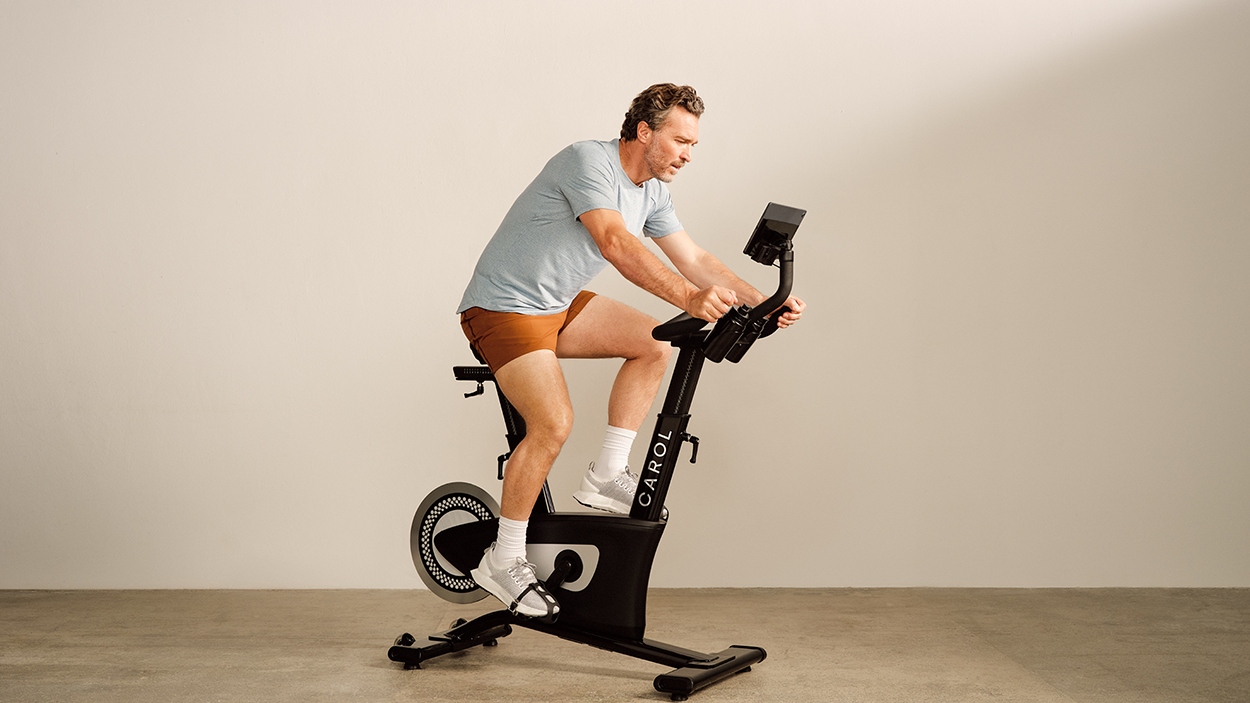
REHIT on CAROL Bike delivers superior health and fitness benefits compared to traditional cardio—in 90% less time.
During the ultra-cycling ride
Proper preparation lays the groundwork for success in ultra-distance cycling. But once you’re on the bike, smart strategy is key to protecting your body, managing fatigue, and making it to the finish line. Here’s how experienced ultra-cyclists approach the ride:
Pace yourself: stay below Zone 3
Endurance is a marathon, not a sprint. To conserve energy over hundreds of kilometers, stick to 3 training zones during your ride:
- Zone 1 (below 55% FTP): Active recovery and gentle spinning
- Zone 2 (56–75% FTP): Your endurance sweet spot
- Zone 3 (76–87% FTP): Sustainable effort for moderate climbs or headwinds
Your FTP reflects the maximum power you can hold for an hour. Staying below this threshold is critical if you want your legs—and your glycogen stores—to last the distance.
Properly fuel yourself
Nutrition is as important as pacing. Ultra-cyclists recommend foods that are:
- Dense and low-volume (to avoid stomach upset)
- High in carbohydrates, but low in fat and fiber for faster digestion
Most cyclists use a mix of liquid gels and solid foods like bananas or oat bars.
Hydration is equally important. Plan for at least 500 ml of water per hour, plus 200–400 mg of sodium to replenish electrolytes lost through sweat.
Be mentally prepared
Endurance riding is as much a mental challenge as a physical one. Break the route into manageable milestones, celebrate small wins, and conserve energy wherever you can (e.g., coasting on descents). Slow and steady often wins the race—especially when riding through the night or facing unexpected elevation gain.
The impact of ultra-cycling on your body
Extreme ultra-endurance events take a heavy toll on both the mind and body. Cycling for more than 6 hours straight puts immense strain on nearly every bodily system and can trigger significant physiological changes. Cyclists often encounter a range of challenges, including:
Muscle damage and inflammation
While the average speed during long-distance cycling might seem low, the sheer duration creates a different kind of stress. Hours—or days—of continuous pedaling lead to micro-damage in muscle-fibers and widespread inflammation.
Under normal circumstances, this is part of how muscles grow:during recovery, inflammation washes out weak muscle fibers to make way for stronger ones. But in ultra-distance events, riders often don’t get the recovery time their bodies need, especially during multi-day races. Over time, this can cause chronic muscle fatigue and lingering soreness.
A 2022 study of ultra-runners completing an 11-day, 768 km ultra-trail race found that muscle damage biomarkers and lower-limb strength only returned to normal after 9 days of recovery. Notably, liver damage biomarkers stayed elevated even longer, underscoring how prolonged ultra-endurance efforts can strain more than just muscles.
Repetitive-use injuries
Ultra-cycling places unique physical demands on the body. Long hours of repetitive pedaling combined with holding a static riding position create a perfect storm for overuse injuries—especially as fatigue sets in.
A recent study of ultra-endurance athletes revealed just how common these injuries are: 50% reported injuries within the past 12 months. Among ultra-distance runners, triathletes, and cyclists,, cyclists showed the highest rates of knee injuries.
Cardiovascular problems
Ultra-cycling places sustained demands on the cardiovascular system. For much of an ultra-distance ride, cyclists operate at 60-70% of their threshold heart rate, keeping their heart working slightly above resting levels for hours—or even days.. This prolonged effort can lead to elevated resting heart rates during multi-day events, a clear sign of the body struggling to recover. While these adaptations are often temporary and part of building endurance, research suggests that extreme ultra-endurance efforts may, in rare cases, contribute to longer-term changes in cardiac function.
Studies have linked high-volume ultra-endurance exercise to conditions such as myocardial fibrosis, diastolic dysfunction, and arrhythmias. While these findings are still under investigation and primarily affect elite-level ultra-endurance athletes, they highlight the importance of balancing training stress with adequate recovery.
Caloric deficit
A caloric deficit during ultra-endurance events is almost unavoidable. Even with a high-carbohydrate diet before and during the ride, most ultra-distance cyclists struggle to meet the energy demands needed to sustain glycogen levels.
It’s recommended to consume 10-12 g of carbohydrate per kg of body weight per day to prepare for an ultra-distance event, and 90g of carbohydrates per hour during the event itself. However, these numbers are tough to achieve in practice. For reference, 1 portion of pasta (100 g) contains about 25 g of carbohydrates. So an 80-kg rider would need to eat about 32 portions a day to meet pre-race requirements.
During the ride, falling short on fueling forces the body to break down muscle fibers for energy—a process that not only depletes strength but also delays recovery. Managing nutrition effectively becomes one of the most critical challenges of ultra-distance cycling.
Conclusion
Ultra-cycling is physically and mentally grueling—but that’s exactly what makes it so rewarding. Ultimately, it’s more than just a long bike ride. It’s a way of building self-confidence, meeting like-minded people, and experiencing breathtaking landscapes.

Got a question? Let's book a call.
All our experts have MSCs in Exercise Science, and they’re here to answer your questions. Whether it’s about the science behind CAROL Bike, or general fitness advice, whatever’s on your mind—we’re here for you.