Few fitness questions are asked more often than this one: can cycling lose belly fat? It is a fair thing to want to know, because belly fat is not just a matter of how your clothes fit. The fat stored deep around your organs — visceral fat — is one of the more telling markers of long-term metabolic health. The short answer from the evidence is yes, cycling can reduce belly fat, but how you ride matters more than how long you spend in the saddle. Below, we look at what the research actually shows, and why intensity is the part most people overlook.
Can cycling actually reduce belly fat?
The evidence here is encouraging and specific. In a 16-week trial, postmenopausal women with type 2 diabetes who cycled using high-intensity interval training reduced their visceral fat by around 24%, with no change to their diet at all, while a moderate continuous cycling group saw no significant visceral fat loss (Maillard et al., 2016).
That result is not a one-off. A 2024 umbrella review pooling 79 randomised controlled trials and 2,474 participants found that interval training reduced body fat percentage and visceral adipose tissue more than moderate continuous exercise — and that the benefits were most pronounced when the modality was cycling and the sessions were short (Poon et al., 2024). Cycling, in other words, is not a compromise. For shifting the fat that sits around your middle, it is one of the better-studied tools you have.
The belly fat that matters for your healthspan
It helps to be precise about what you are trying to lose. The body stores fat in two main places around the abdomen: subcutaneous fat, which sits just under the skin, and visceral fat, which packs in around the liver, pancreas and intestines. They are not equally important.
In a meta-analysis of 35 cohort studies covering more than 923,000 adults, each one-standard-deviation increase in visceral fat was associated with a 17% higher risk of death from any cause — while subcutaneous fat carried no such risk, and if anything trended the other way (Jayedi et al., 2022). A separate cohort study found that a higher visceral fat score predicted both cardiovascular events and all-cause mortality, regardless of a person’s blood sugar status (Zhu et al., 2023). So when you ask whether cycling can lose belly fat, the question worth asking is really about visceral fat — and that is precisely the fat that responds well to harder riding.
Why you cannot target fat — but intensity changes the result
One myth is worth retiring early: you cannot spot-reduce. Pedalling does not melt fat off the area doing the work. Fat is mobilised from across the body, governed by your overall energy balance and hormones, not by which muscles are moving.
There is a detail here that surprises people. During an all-out sprint, your muscles are fuelled mainly by carbohydrate, not fat. Yet interval training still produces meaningful fat loss — comparable to much longer endurance sessions — because the fat is burned across the hours and days that follow, not during the effort itself (Kolnes et al., 2021). This is why judging a workout by how much you sweat, or how long it lasts, can be misleading. What you are really doing with a hard cycling session is changing how your body handles fat for the rest of the day.
How hard you ride matters more than how long
If there is one finding to take from the research, it is that intensity is the lever. When 59 women were randomised to four different cycle-ergometer programmes for 12 weeks, the interval groups — training at or above 90% of their maximum — cut their abdominal visceral fat area by more than 15 cm², compared with under 3.5 cm² for the moderate continuous group, despite all groups doing comparable total work (Zhang et al., 2020).
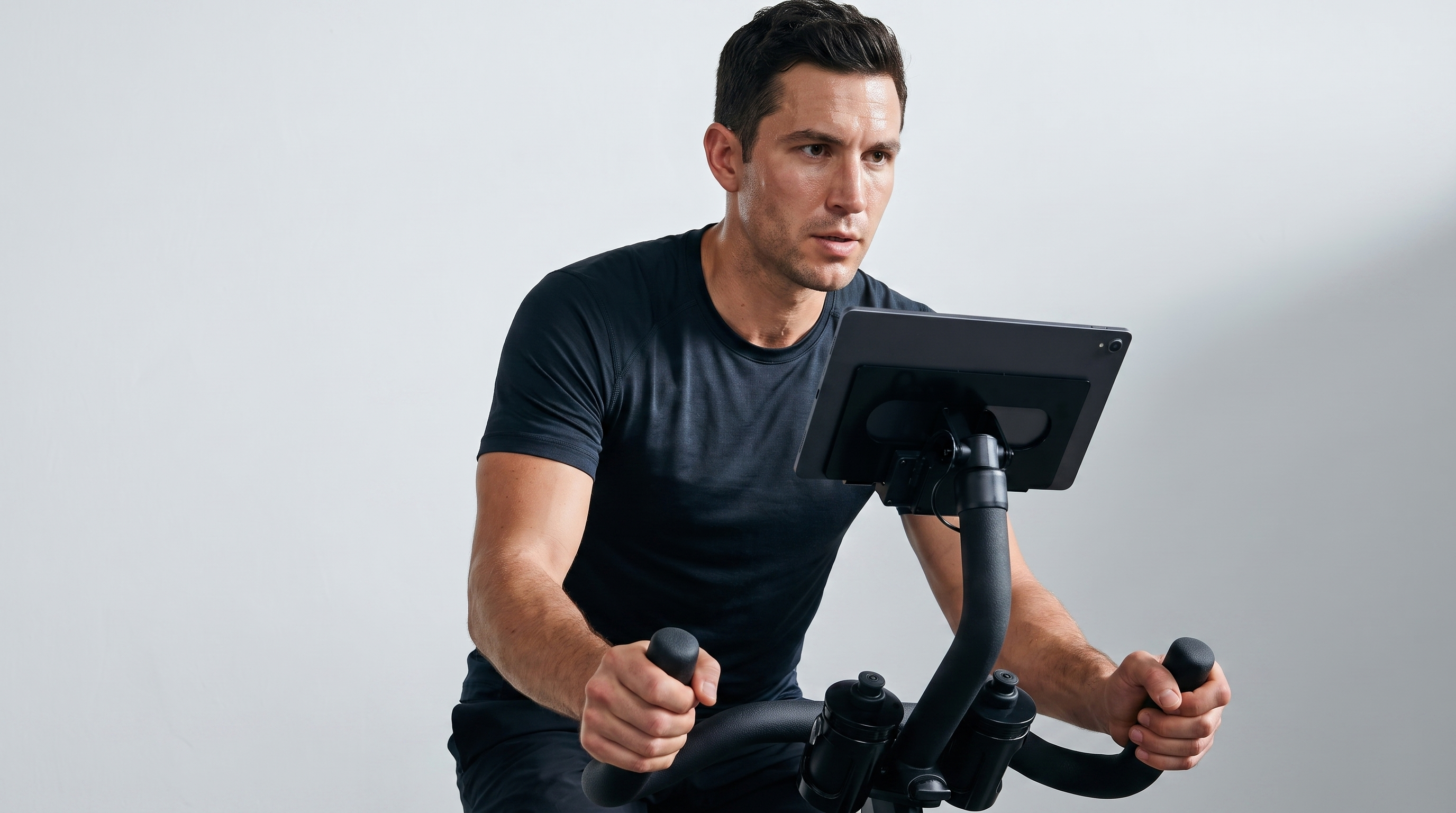
It also does not appear to matter much whether you cycle or run. A 12-week trial directly comparing cycling and running interval programmes in men with overweight or obesity found both reduced visceral fat to a similar degree (Couvert et al., 2024). For most people, that makes the stationary bike the more practical choice: it is low-impact, weather-proof and easier to push to a true all-out effort safely. The pattern across these studies is consistent — short, hard cycling tends to outperform long, gentle cycling for visceral fat, even when the gentle sessions take far more of your time.
A note on honesty: the picture is clearest in people who have visceral fat to lose, and individual responses vary. None of this replaces overall energy balance, sleep or what you eat. But for the time invested, the return on harder cycling is hard to ignore.
Where REHIT fits in
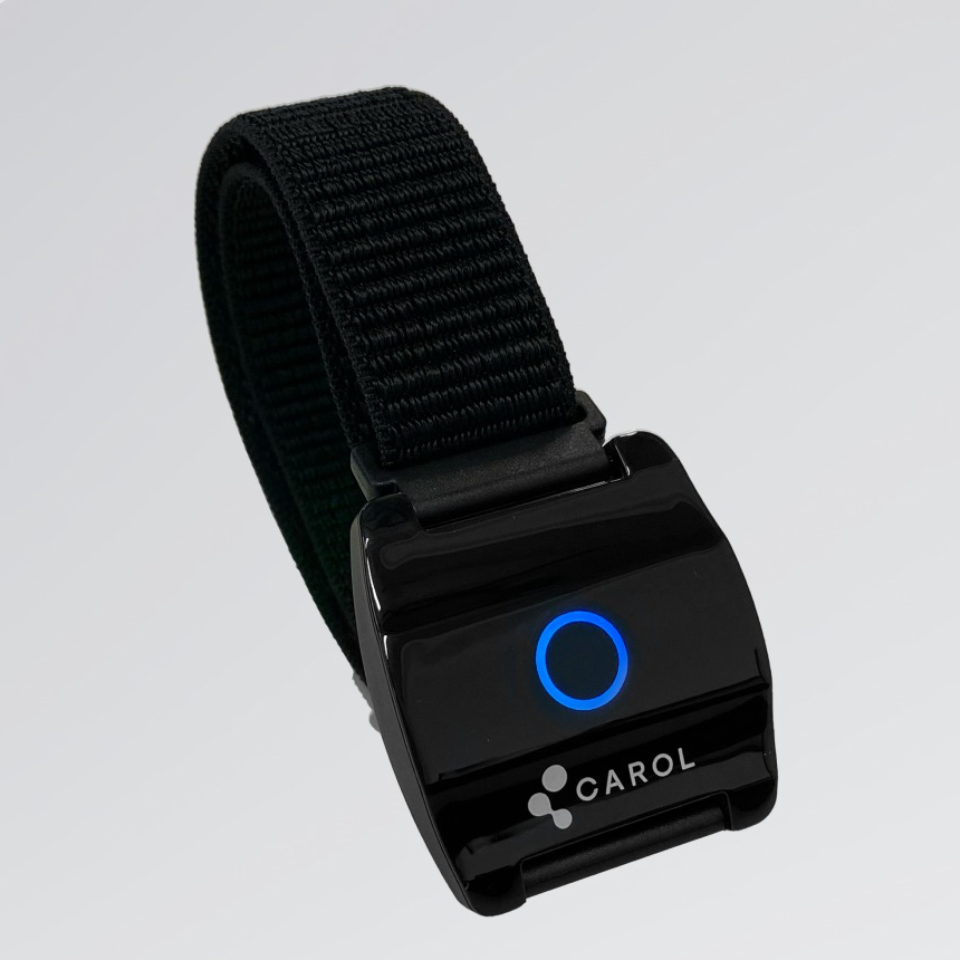
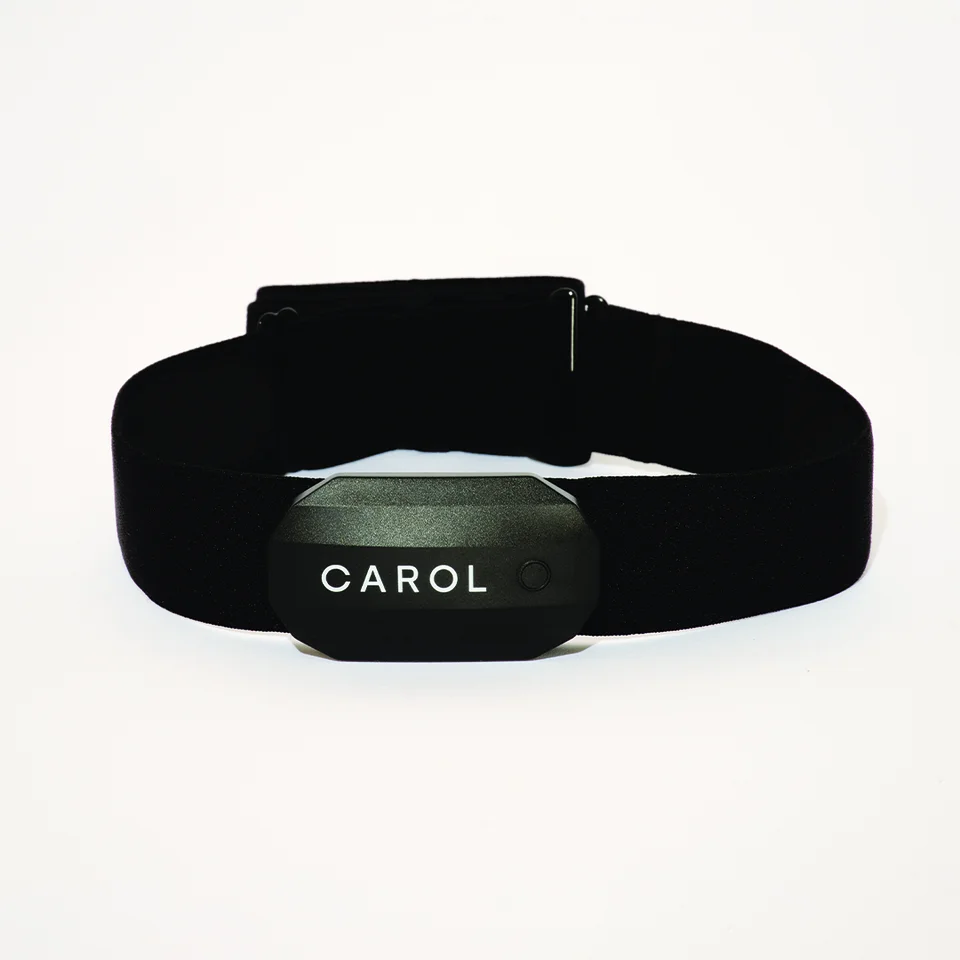
This is the principle CAROL is built around. REHIT — Reduced Exertion High-Intensity Interval Training — is our signature workout: a session of roughly five minutes built around two 20-second all-out sprints. It is the shortest practical expression of the intensity-over-duration finding running through the research above. You are not asked to ride for an hour; you are asked to ride genuinely hard for two very brief windows, and then stop.
The point is not that five minutes is magic. It is that the part of cycling that drives visceral fat loss — brief, maximal effort — is also the part most people skip when they ride at a comfortable, conversational pace. REHIT is designed so you cannot skip it, and so the hard part is over almost as soon as it begins.
The bottom line
Can cycling lose belly fat? Yes — and the belly fat it targets most effectively, visceral fat, is the kind that matters most for your long-term health. The evidence points in one direction: it is the intensity of your cycling, not the hours you log, that does the work. You cannot choose where the fat comes off, but you can choose to ride in a way that gives your body the strongest reason to use it. A few minutes of genuinely hard effort, done consistently, will outwork a long comfortable ride — which is rather the whole idea behind REHIT.
Evidence in this article is drawn from research indexed on PubMed; each claim links to the source study via its DOI. This article is for general information and is not medical advice.